PAPUA NEW GUINEA SNAKEBITE PROJECT
A DAY AT THE MUSEUM
Next I photographed the head of every specimen in dorsal, right lateral, left lateral and ventral planes. For the smaller specimens this meant using a MP-E 65mm set-up. I also photographed the cloacal region and the tip of the tail, which vary across the genus, and any other scale abnormalities I encountered in my examinations.
Next I measured every specimen that could be laid out (not all could), obtaining the SVL (snout-to-vent length) and TTL (total length, SVL+tail). A few specimens could be sexed, males with extended hemipenes, but the condition of most prevented me recording this data.
Finally I obtained a series of scale counts, ie. dorsal scale rows at mibody, one head length posterior to head and one head length anterior of cloaca; number of ventrals; condition of cloacal plate, entire or divided, number of subcaudals and whether they were single or paired. Ventral and subcaudal counts required that I insert entomological pins every 20 scales to avoid time consuming re-counts when I lost where I was up to because of a twisted coil or damaged section.
I did this for every one of the 12 specimens as best I could.
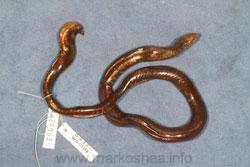
I finished the Toxicocalamus around midday and then started to explore for other interesting species of Papuan snake that I would ultimately need to examine. I ran two specimens of the rarely encountered Black-striped snake (Rhinoplocephalus nigrostriatus) through the same sequence and then stumbled on a curious burrowing snake, a member of the Sharp-nosed blindsnake genus Acutotyphlops, which species I have yet to determine, characterised by its stout body and pointed snout. These snakes feed on earthworms and occur on the Bismarck Archipelago and in the Solomons, there being only one mainland New Guinea record. Sadly there was no collection date for this pre-Independence specimen, but it was interesting all the same.
 |
 |
A curious Sharp-nosed blindsnake Acutotyphlops sp. |
Suddenly it was almost 16:00 and time to leave. Doesn't time fly when you are engrossed in something.
I headed home well pleased with my day, I had processed not only the 12 Toxicocalamus but some other specimens as well. Next I have to work my way through the 29 Toxicocalamus specimens in the University of PNG collection.
Click on any image to enlarge it
|


