PAPUA NEW GUINEA SNAKEBITE PROJECT
SOMETHING FOR THE WEEKEND
I have a lot of work to do. If it took a day to go through, examine, scale count and photograph the dozen or so Toxicocalamus in the NMPNG collection it should take two days or more to work through the 30 specimens in the UPNG collection, but I simply don't have that much available time for specimens, especially if I am trying to rest my right eye for some of the time. I have today, Friday, only!
I took off up to UPNG to meet Paulus Keip and get access to the collection as promised, then sitting in his office I had a brainwave, would he be prepared to loan me the specimens over the weekend so I could work in my accommodation at a less rushed pace.
"Of course", he replied, "no problem".
Great relief. So we gathered the specimens for me to borrow until Monday, I have something for the weekend!
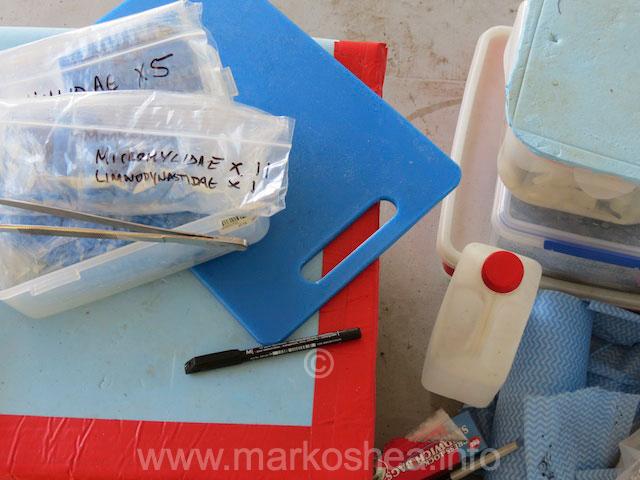
I then drove down to the Museum where I met up with Bulisa again. He provided me with some ethanol so I could 'spirit' the voucher specimens I had collected in the field (nothing to do with the UPNG Toxicocalamus I had just loaned). Specimens are fixed in 10% formaldehyde, known as formalin, but once fixed they should be transferred as soon as possible to 70% ethyl alcohol, known as ethanol, for permanent preservation or transportation. In the museum they will sit in jars of ethanol but when being shipped they will be in double-sealed bags wrapped in ethanol soaked cheescloth or similar material to keep them from drying out. I had formulin but no ethanol so Bulisa kindly provided me with a couple of litres to spirit the specimens. This took most of the afternoon as the bags needed to be labelled too and a list of specimens and species made for the exportation documentation. All the specimens were of non-CITES* species, neither endangered not controlled in trade, ie no pythons, boas or monitor lizards.
My specimens are going back to the UK where I will finish the identifications and then they will be accessioned into the Natural History Museum, London, which has a Papuan collection dating back to the 19th Century. Without these collection to revisit we could not conduct much of our research into the world's flora and fauna so oddly these collections of dead animals are used to protect those that are living but under threat.
* CITES = Convention on International Trade of Endangered Species of Flora and Fauna, an international convention which protects species on the brink.
 |
| Preparing specimens for shipping |
Click on an image to enlarge it
Click next page below for page 2
|