|
|
||||||||


|
AUSTRALIA
2000 "On The Edge" Australian Reptile Park, Gosford
The Australian Reptile Park (ARP), 80 kms north of Sydney at Gosford, was founded in 1949, initally as the Ocean Beach Aquarium, by Australian herpetologist Eric Worrell (1924-1987). It comprised not only a reptile park open to the public, but also a venom extraction establishment providing venom to the Commonwealth Serum Laboratory for snakebite research and antivenom production. Eric Worrell received an MBE from Queen Elizabeth for this work in 1970, the same year ARP moved into venom extraction from Sydney funnel-web spiders (Atrax robustus) the cause of a number of fatalities during the 20th Century. In 1980 the antivenom finally became available for the treatment of funnel-web spider bites.
Eric Worrell died of a heart-attack in 1987 but ARP continued to expand, both as a tourist attraction and a venom production unit, under the guidance of American herpetologist John Weigel and his wife Robyn and in 1999 ARP received the "Award of the Decade" for its achievements.
We filmed at ARP as part of two films in Season 2 of OBA during 2000: "On The Edge and "After The Flood". Later that year(16 July) the Park was almost totally destroyed by a huge fire which wiped out the public and research collections. Unbeaten, the Park rebuilt in time for the 2000 Olympics in September and has done from strength since then with John Weigel receiving the Member of the Order of Australia for his contributions to herpetology, toxinology and tourism.
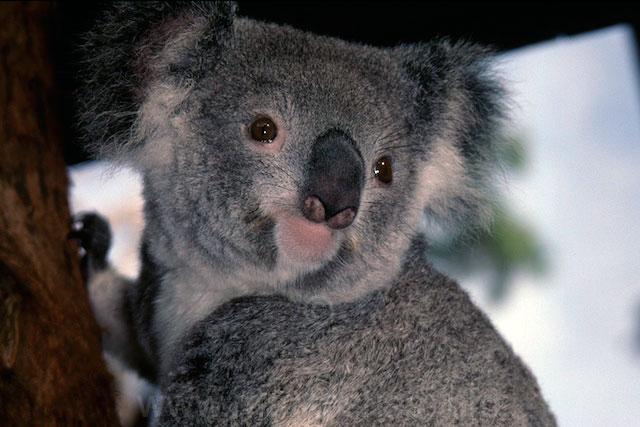
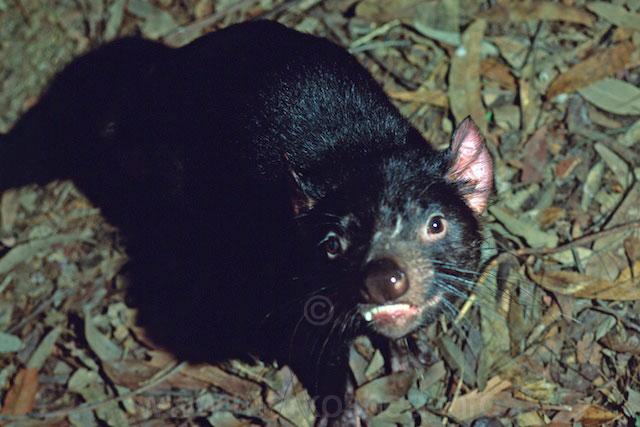
One of the other projects close to John Weigel's heart is conservation of the Tasmanian devil (Sarcophilus harrisii). This truculant predatory marsupial threatened by a dreadful disease called DFTD (Devil Facial Tumour Disease). Even the seemingly cuddly Koala (Phascolarctos cinereus) population is suffering from an epidemic of Chlamydia.
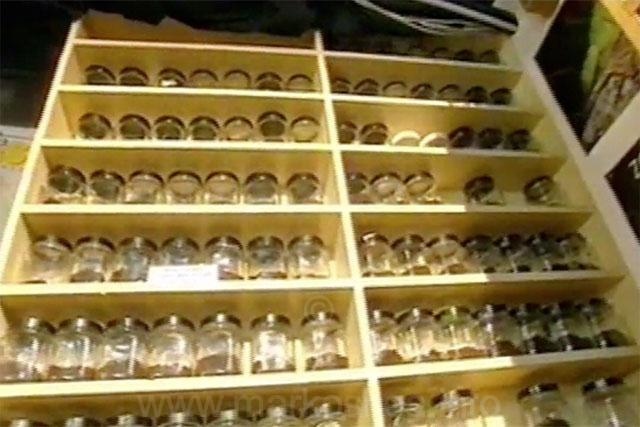
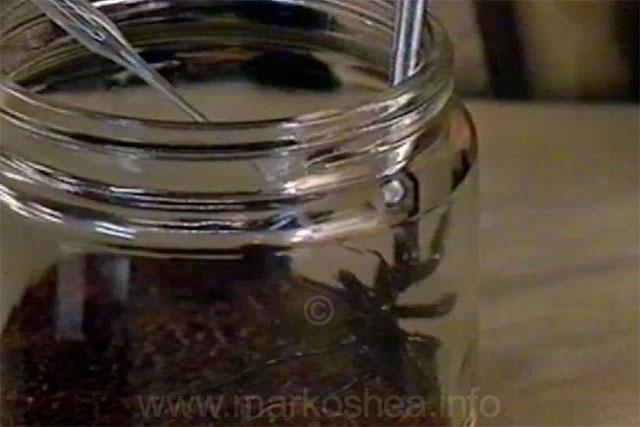
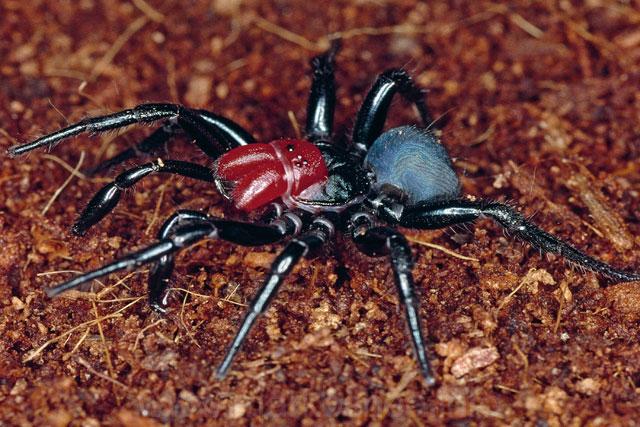
But our main reason for being at ARP was to meet my contributor for the funnel-web spider section of "On The Edge", ARP spider expert Roz Whitten, and for me to learn how to milk (extract venom) from a funnel-web spider. I learned how to do this with the most dangerous spider in the world, the Sydney funnel-web spider (Atrax robustus). The process is simple, you touch the male spider on his swollen pedipalps (male sexual organs) with a probe and this enraged him enough to produce venom from his fangs. The venom is then drawn up using a pipette. Whilst at ARP I also took the opportunity to photograph some of Ausralia's other impressive spiders such as the colourful Red-headed mouse spider (Missulena insigne).
|
||||||||||||||||