|
|
||||||||


|
INDIA
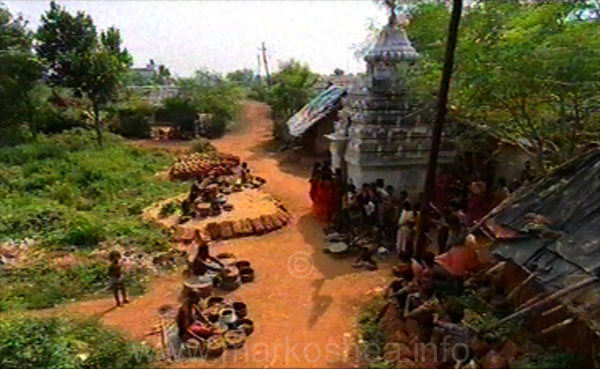
2001 "The Cobra's Revenge" Patia, Orissa State
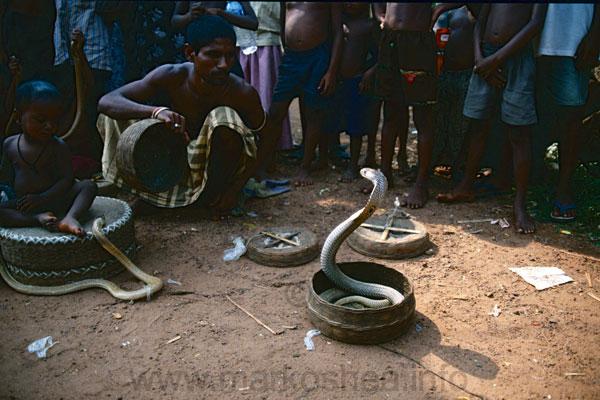
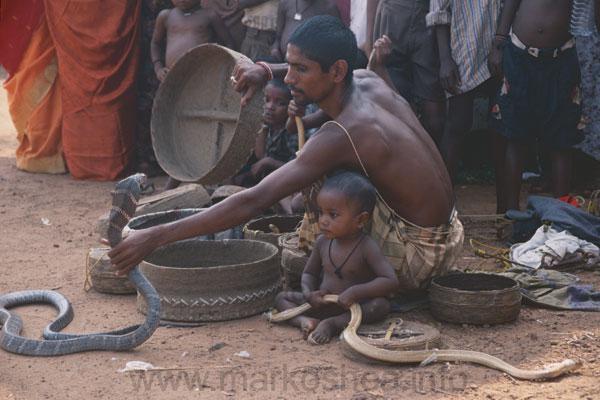
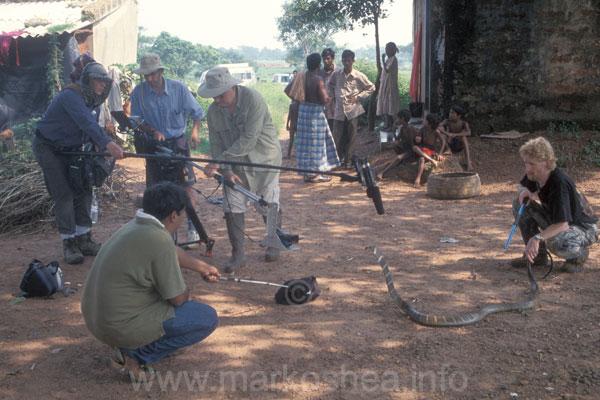
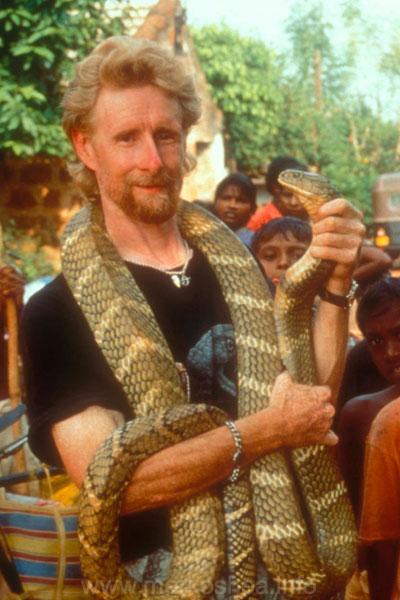
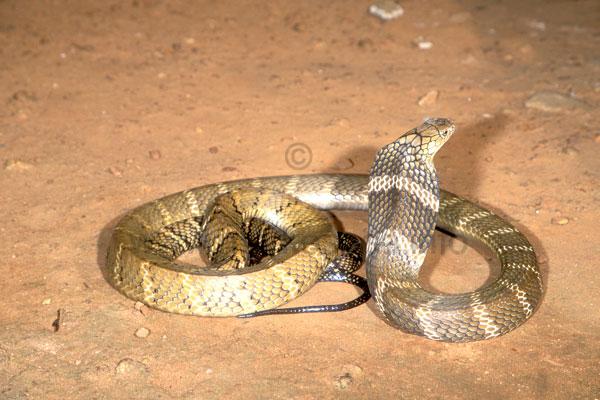
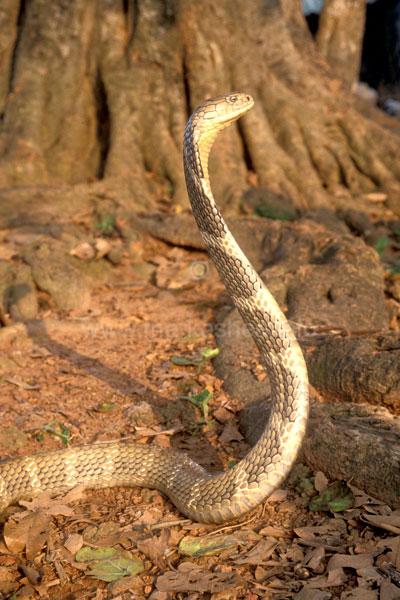
We visited to film the snake charmers and some local 'colour'. This may account for why small children are allowed to handle some of the cobras in the village, notably the sick-looking cobra, a pale form of Thai monocled cobra (Naja kaouthia) that resembled a Suphan cobra from Thailand. Because of this our contact's favouite King cobra, a 4.0 m male, was kept outside the village boundaries, so that it could be kept in its original 'hot' condition, ie. fully in possession of its fangs, venom glands and venom and therefore capable of delivering a fatal bite. Whilst in the village we also learned that the snake charmers' baskets are lined with cow-dung as a defense against external parasites on their snakes.
Patia proved a very lively place with lots of film-worthy images so we spent two days filming there.
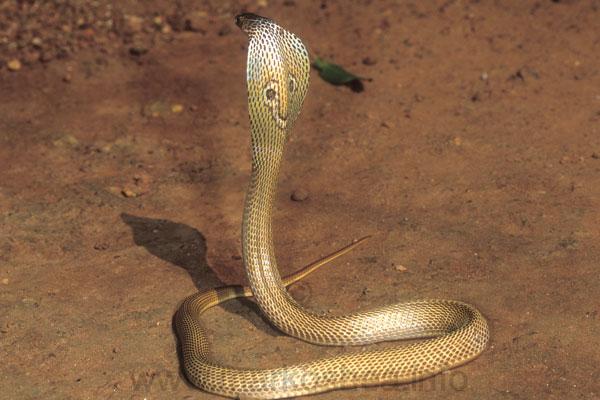
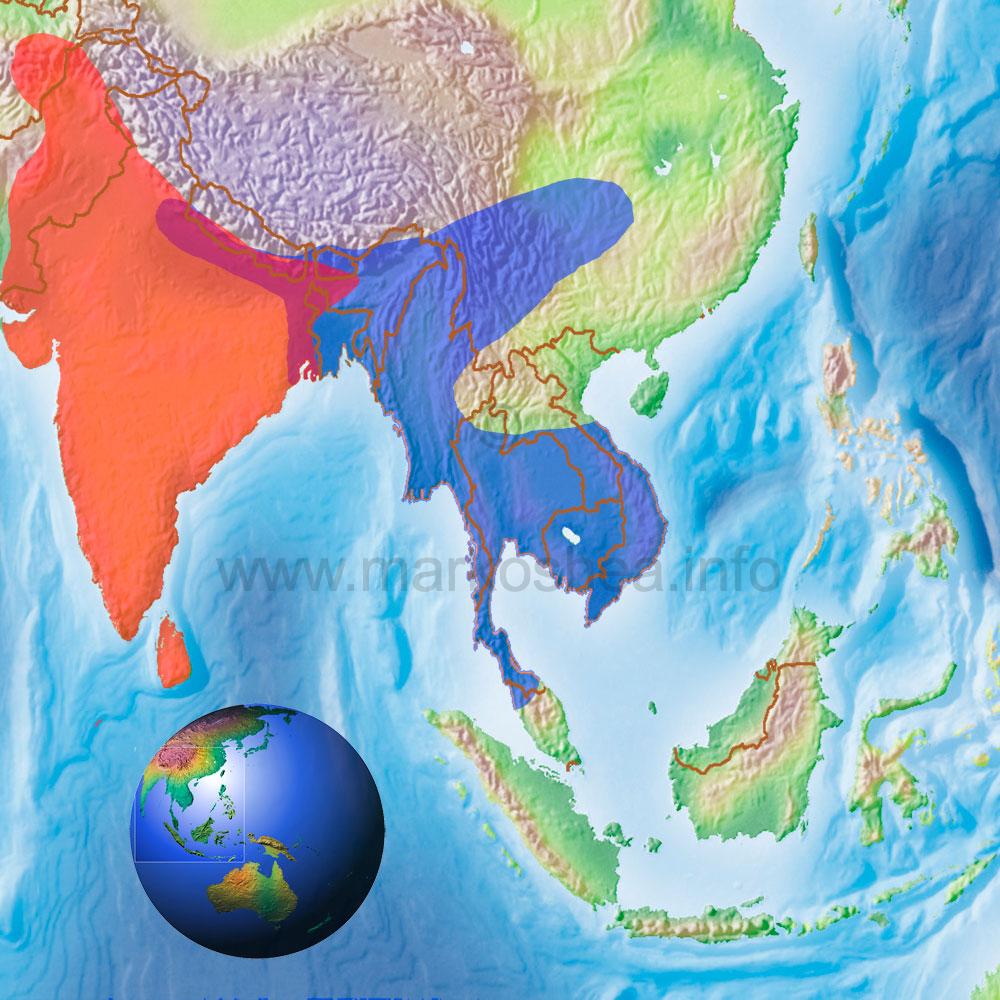
There are two common cobras in northeastern India, the Indian or Spectacled cobra (Naja naja), which ranges to Pakistan and south through India to Sri Lanka, and the Thai or Monoculate cobra (Naja kaouthia), which occurs eastwards onto the Southeast Asian mainland. These two cobras can be easily distinguished from each other, and the King cobra (Ophiophagus hannah) by their hood markings. All three species were present in Patia snake charmers' village.
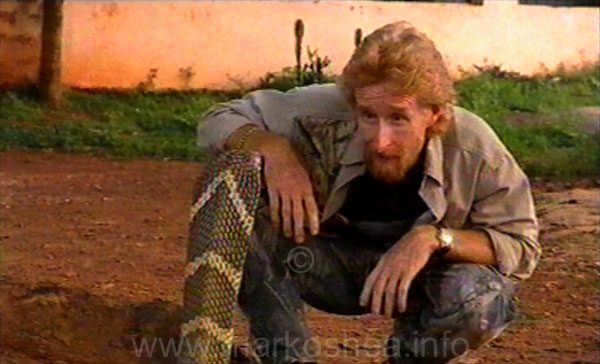
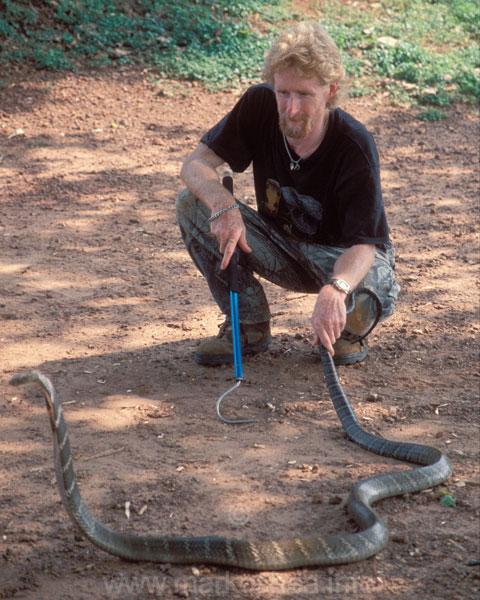
When the 4.0 m King cobra arrived I spent some time getting familiar to it before I handled it for the cameras. The Director wanted some close-ups of a king for the 'top of the show' and this snake was perfect for that purpose too. After walking around the king cobra for several minutes I was able to reach forwards and catch it by hand, but I would not recommend others copying that action.
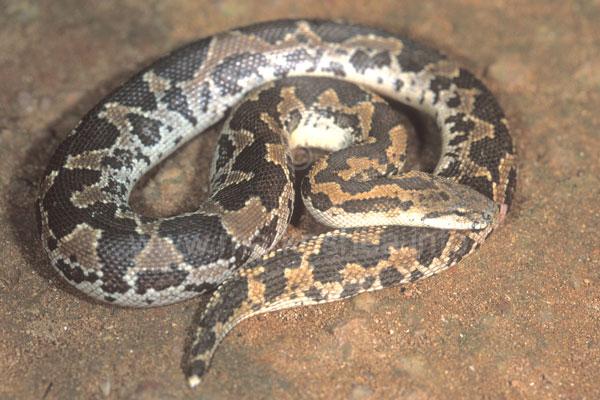
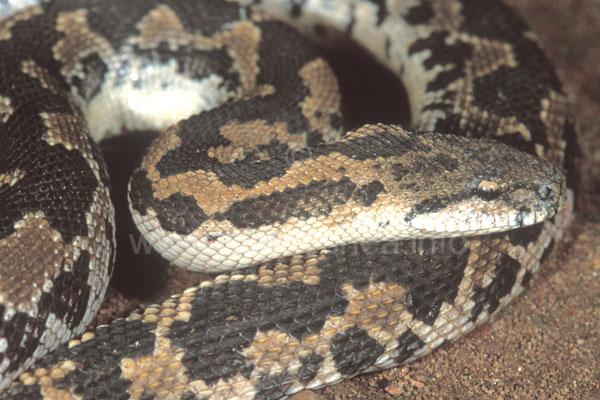
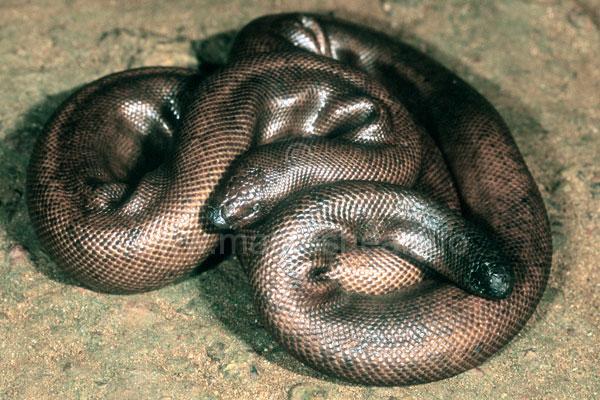
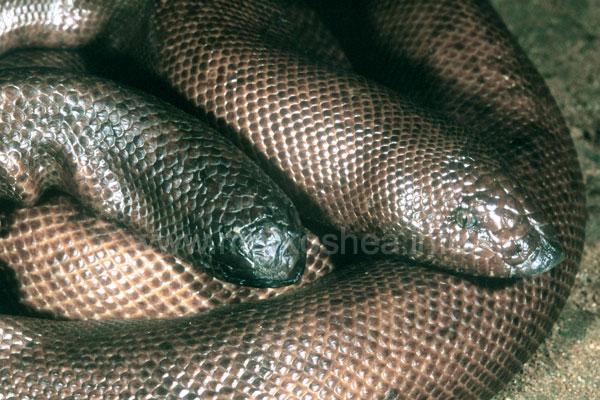
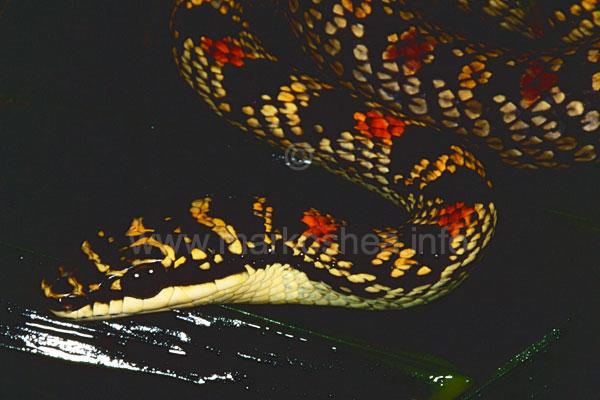
There were also a number of other captive snakes at Patia which I took the opportunity to photograph: Indian sand boa (Gongylophis conicus conicus), Red sand boa (Eryx johnii) and Indian ornate flying snake (Chrysopelea ornata ornata).
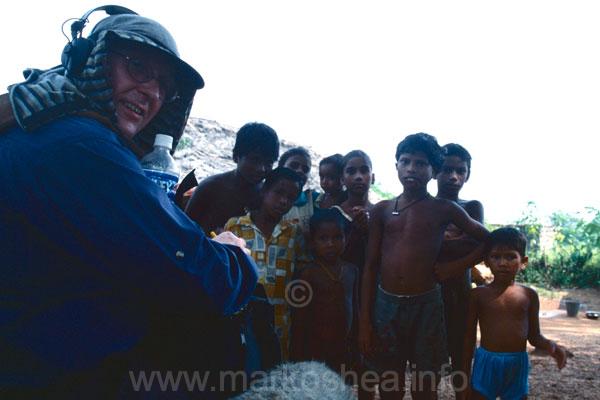
The Patia children were as fascinated by us as we were by the snake charmers.
After filming at Patia village we returned to Bhubaneshwar.
|
|||||||||||||||||||||||||||||||||||||||||||||||||||||||||||||||||||||||||||||