|
|
||||||||


|
THAILAND
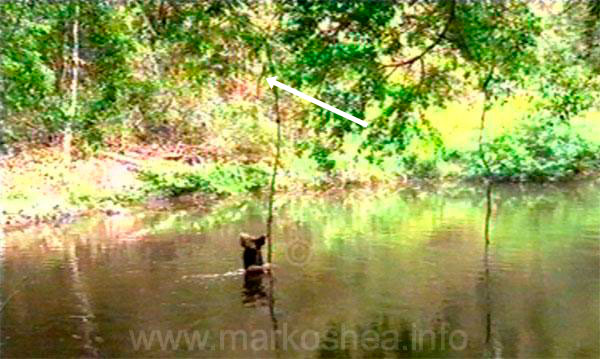
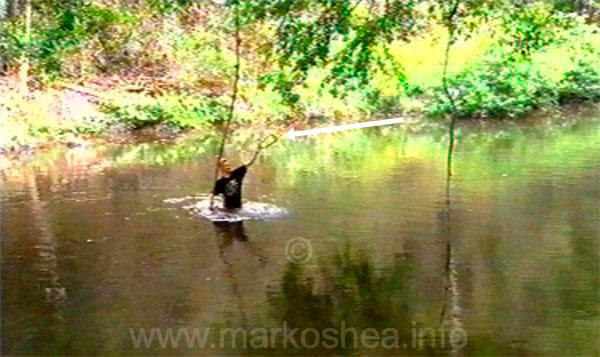
2002 "Siamese Crocodile" Phetburi River - Croc camp These monitor lizard was the largest reptile we encountered at Croc camp, but not the only one. As on the Lo Po River, on Tarutao Is., we observed a number of Reticulated pythons (Python reticulatus) sleeping on spindly branches over relatively deep stretches of the river. We knew the slightest disturbance would cause them to wake and dive to the water, so I positioned myself underneath and had one of the Karen boatmen start to climb towards the snake. As soon as the python became aware of his approach it took evasive action and if I was quite enough I could catch it. We published a note in the Herpetological Review about this sleeping behaviour, it can be downloaded here.O'Shea, Temsiriping & Lynam 2004 Python reticulatus (Reticulated python) Site Selection, Sleeping and Escape Behavior. Natural History Notes. Herpetological Review 35(1):71-72.
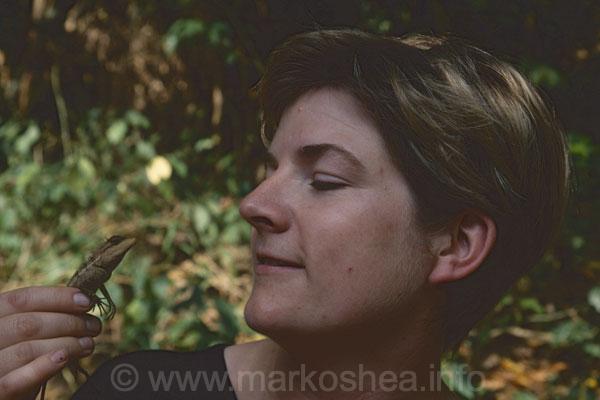
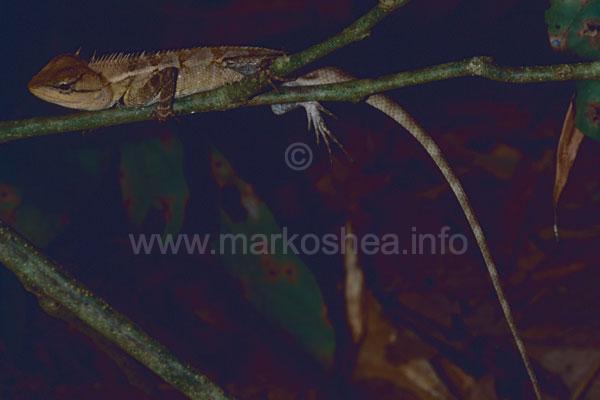
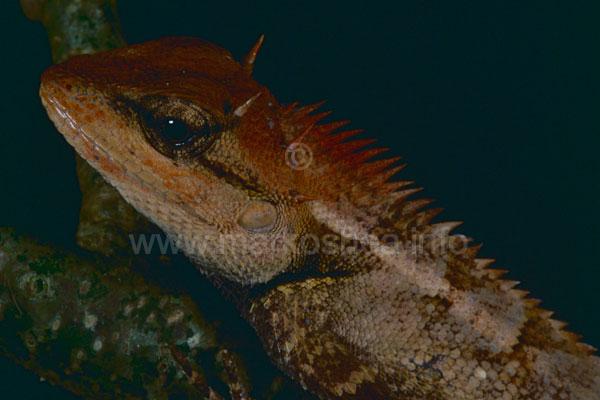
There were numerous smaller lizards than the monitor captured in the crocodile trap. Associate Producer Emma Ross was quite taken with her namesake, a Crested forest lizard (Calotes emma emma).
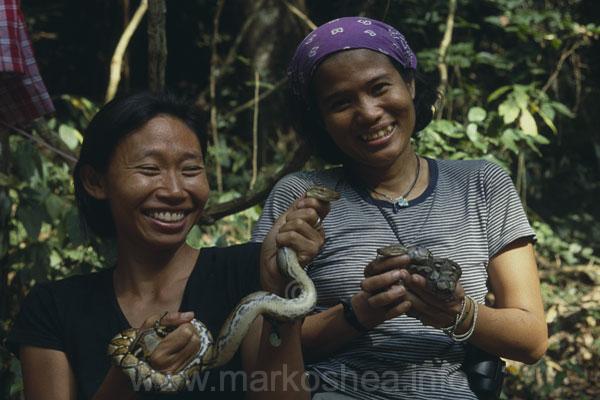
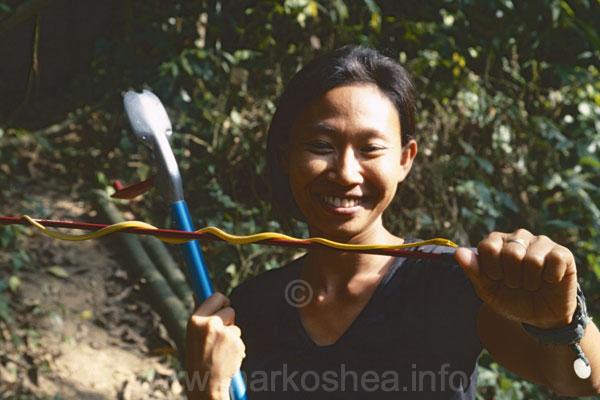
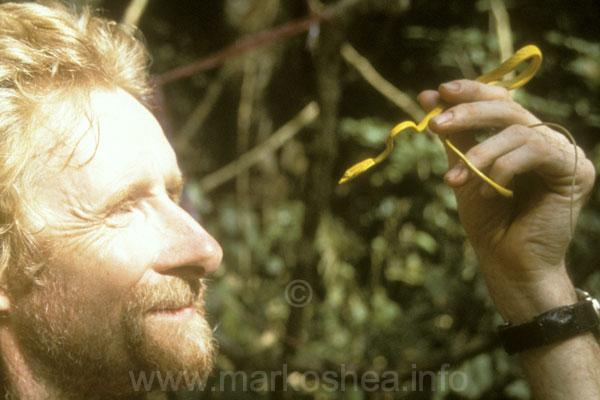
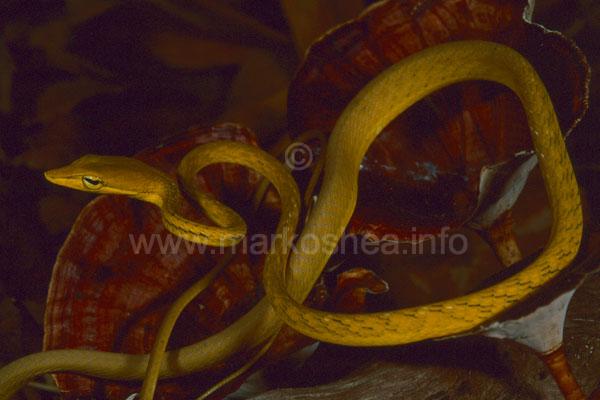
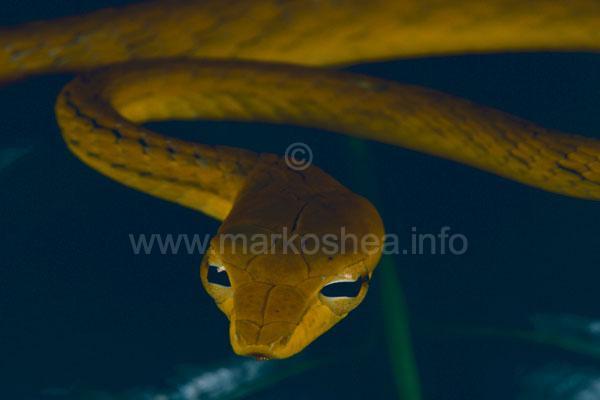
Namfon captured a yellow-phase of the Green vinesnake (Ahaetulla prasina) on the path above the campsite. This amazing snake is one of five species in a genus with probably the best vision of any snake, binocular vision to enable them to hunt cryptically patterned lizards. They are mildly venomous.
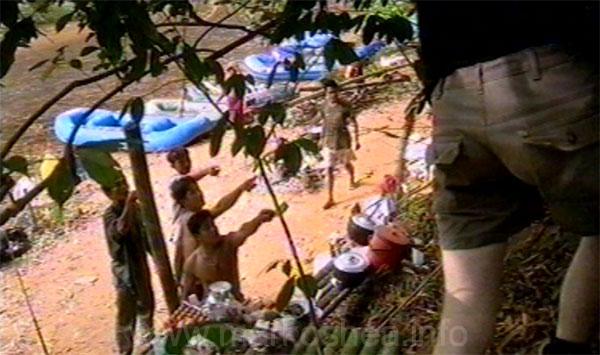
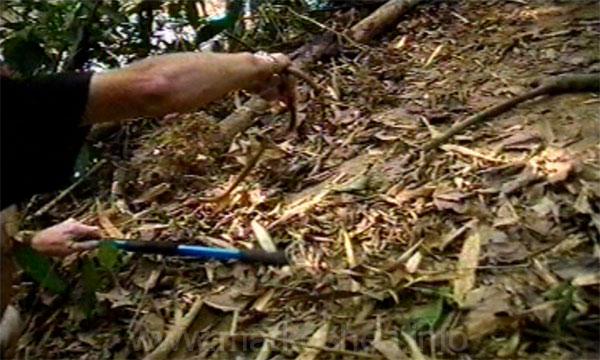
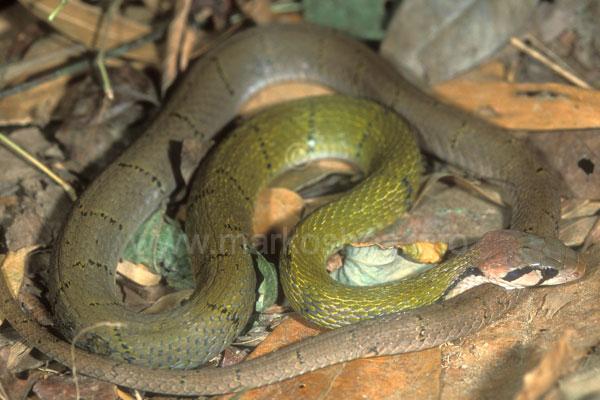
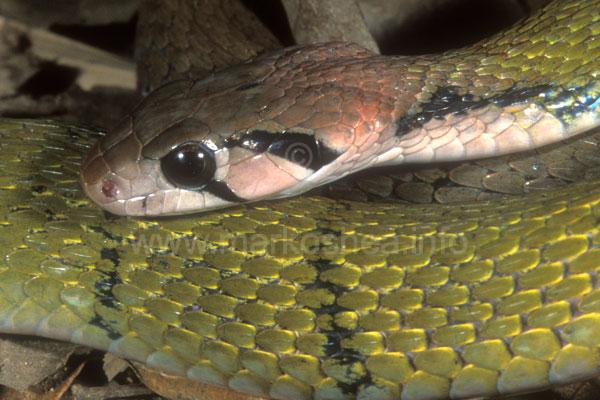
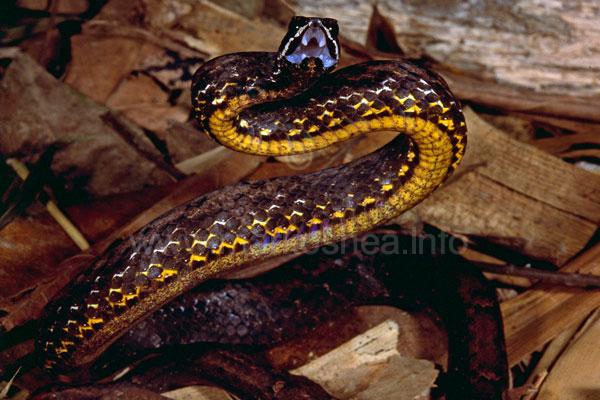
And chaos amongst the Karen cooks and boatmen heralded yet another snake, a Black-ringed keelback (Rhabdophis nigricinctus) heading up the slope. In the ensuing chase both I and the snake nearly ended up on the kitchen table. This is not a snake to simply grab, serious snakebites and even occasional deaths have followed bites by other members of this genus (Rhabdophis subminiatus and Rhabdophis tigrinus) and we were a longway from a hospital.
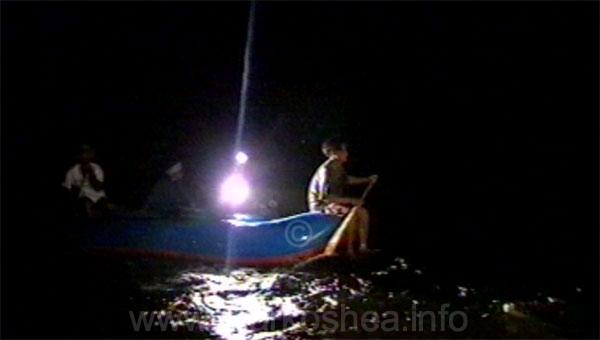
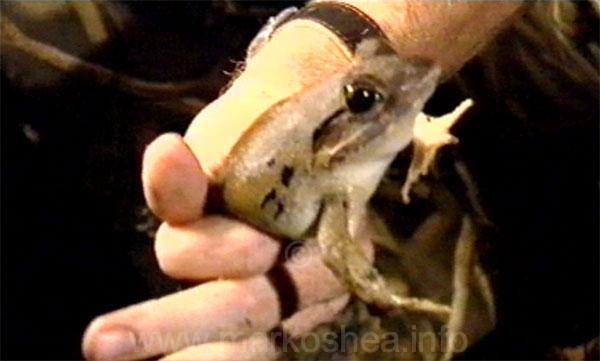
We had the boats carried up stream a distance and then used them to drift back down to camp at night, using torches to locate eye-shine and hoping for crocodiles. We had a moment when we thought we had found a pair crossing the river, but it was a pair of otters. We did locate a few interesting amphibians this way however.
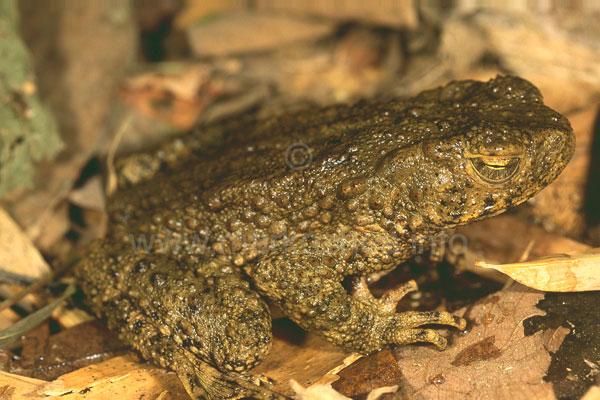
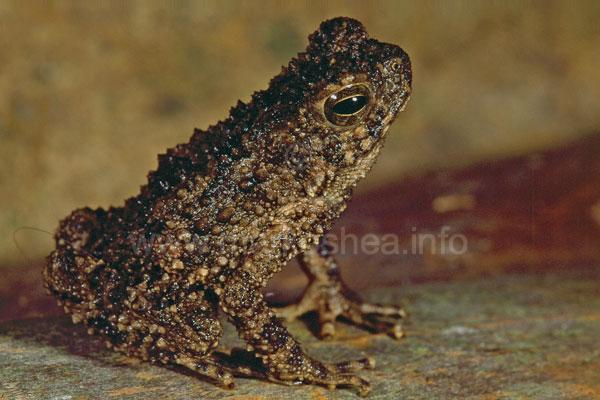
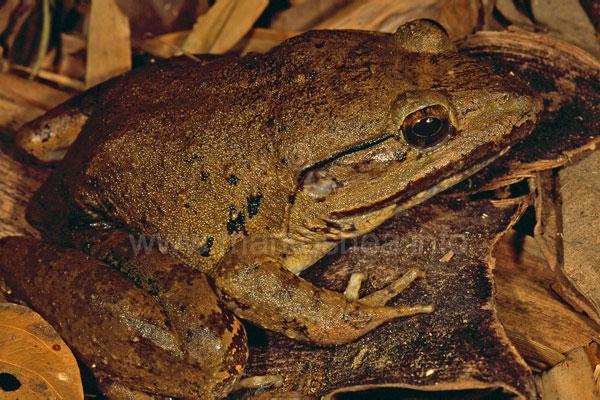
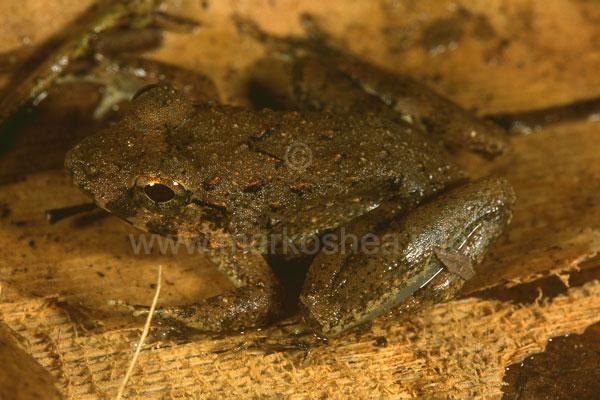
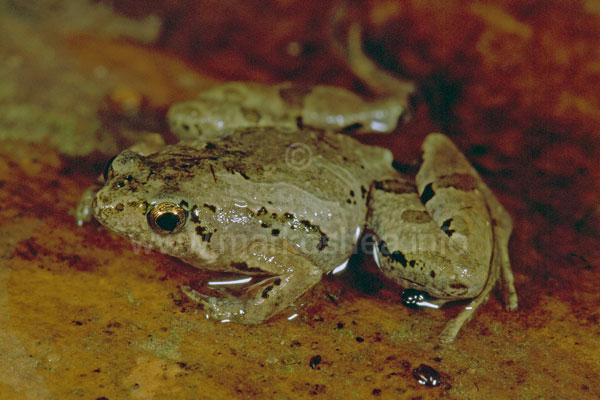
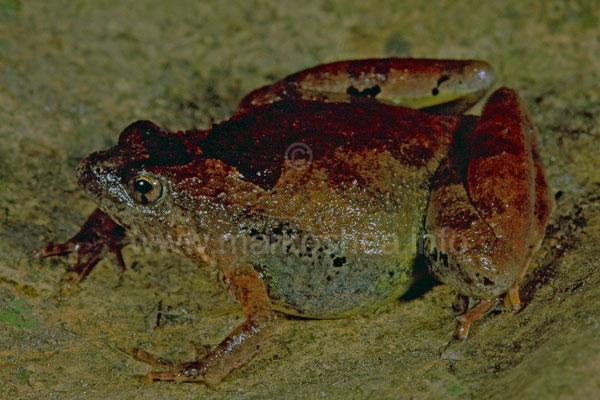
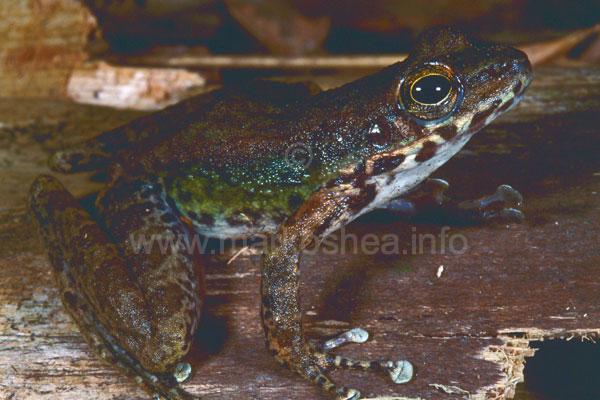
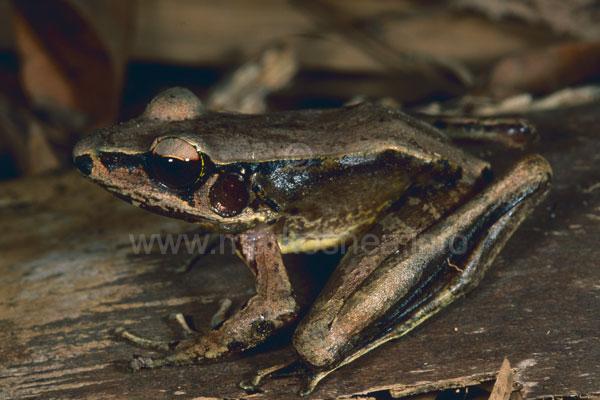
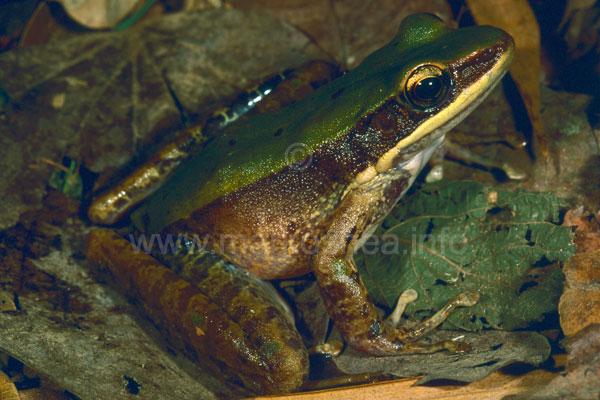
The amphibians recorded during our journey down the Phetburi River, mostly at Croc camp, were the bufonid, Giant Asian toad (Phyrnoidis asper), and possibly a small tuberculate species which defied further identification, two microhylids: Annam narrow-mouthed toad (Microhyla annamensis) and Berdmore's narrow-mouthed toad (M.berdmorei), two dicroglossids: Blythis giant river frog (Limnonectes blythi) and the Common rice-paddy frog (Fejervarya limnocharis), and three ranids: Marbled cascade frog (Amolops marmoratus), Dark-eared frog (Hylarana cubitalis) and Burmese rock frog (Odorrana livida)
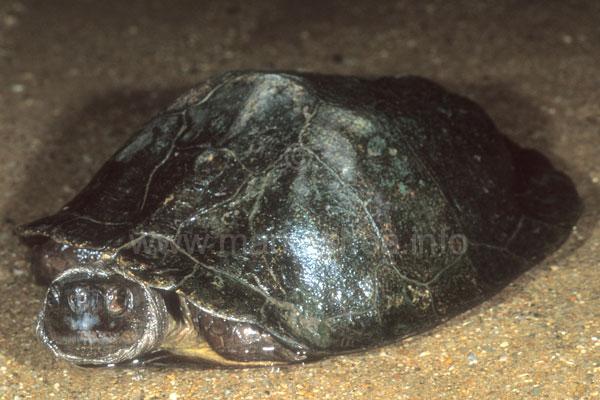
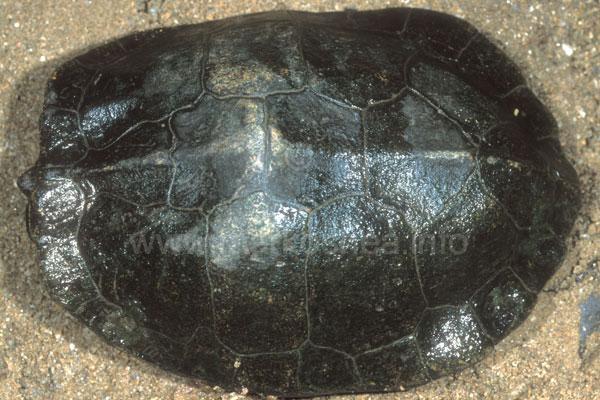
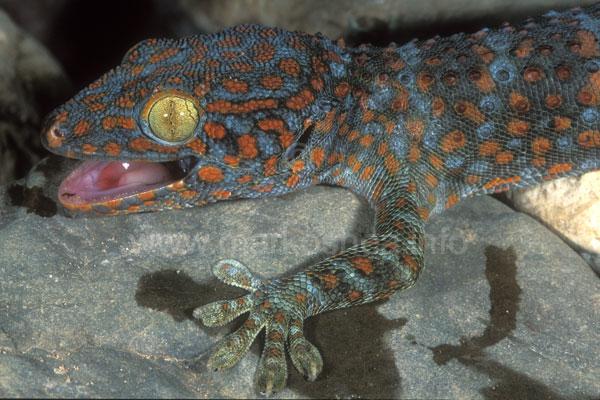
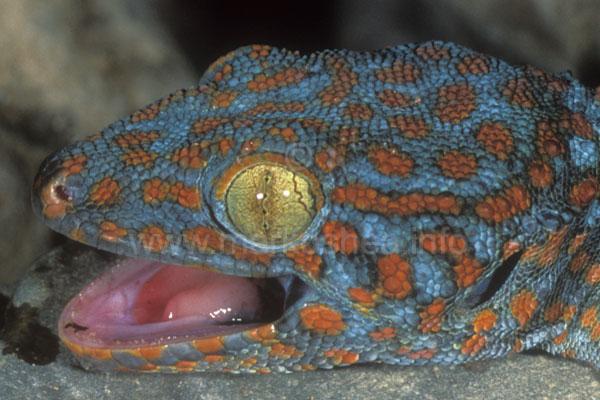
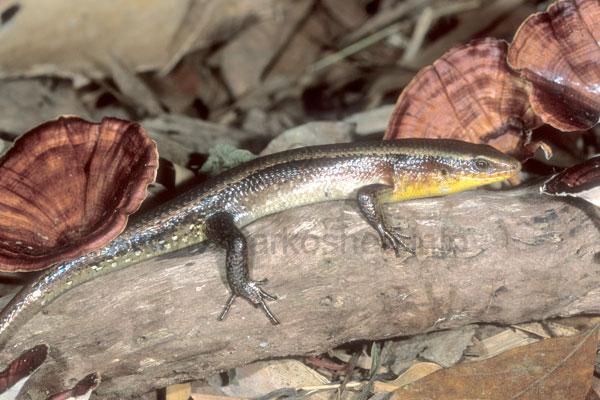
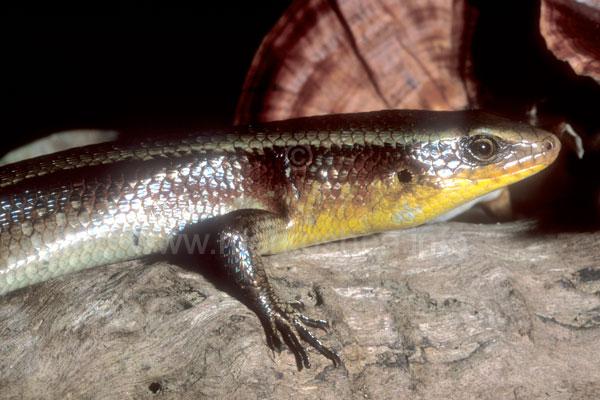
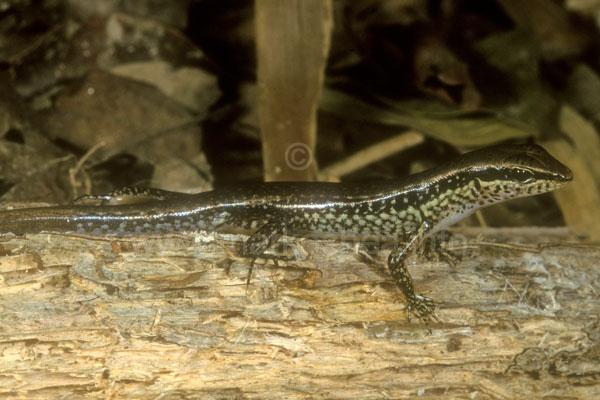
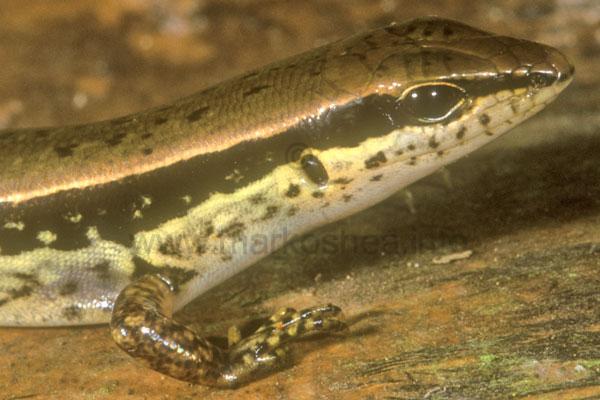
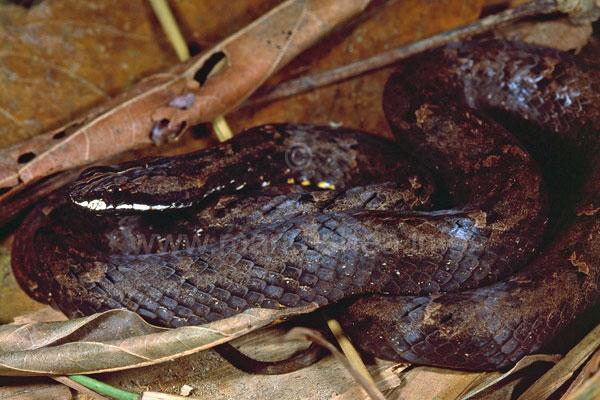
The reptiles recorded from the Phetburi River, in addition to the species mentioned previously, included Asian hill-stream turtle (Clemmys dentata), Common house gecko (Hemidactylus frenatus), Tokay gecko (Gekko gecko gecko), a flying gecko (Ptychozoan sp.) which evaded capture, Common many-banded skink (Eutropis multifasciata multifasciata), Striped skink (Lipinia vittigera), Southern streamside skink (Sphenomorphus maculatus mitanensis), Southeast Asian grass lizard (Takydromus sexlineatus ocellatus), Clouded monitor lizard (Varanus bengalensis nebulosus), and Common mock viper (Psammodynastes pulverulentus). A intensive study of the herpetofaunal biodiversity* of Phetchaburi Province, Thailand, records all the reptiles we observed during our journey down the Phetburi River, except the flying gecko (Ptychozoon sp.) and Crested forest lizard (Calotes emma emma). In relation to this last species, the authors of the survey note that "the absence in our survey of this widely distributed taxon is remarkable". Unaware of its importance, the specimen photographed at Croc camp was not retained as proof of its presence in the province. * Pauwels, David, Chimsunchart & Thirakhupt 2003 Reptiles of Phetchaburi Province, Western Thailand: a list of species, with natuyral hustor notes, and a discussion of the biography at the Isthmus of Kra. Natural History Journal of Chulalongkorn University. 3(1):23-53. One member of the expedition was excited by creatures smaller than the smallest frog. Dr Chukiat Sirivichayakul had an interest in the smallest biting and sucking creatures, the ectoparasites we picked up on the trail. When I get a small tick on my neck he got very excited and collected it for his collection. Director Roger Finnigan mentions chukiat's medical entomological passion in his introduction. This unassuming little man was an advisor of tropical medicine for the Thai military and a seasoned expeditioneer.
|
|||||||||||||||||||||||||||||||||||||||||||||||||||||||||||||||||||||||