|
|
||||||||


|
|
as DAHOMEY 1968
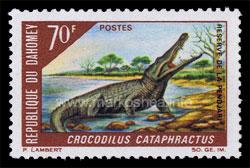
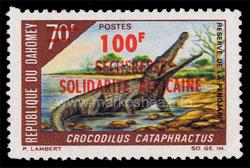
One of four stamps features a West African crocodile (Crocodylus suchus), recently resurrected name for crocodiles from the northwest of Africa, in the Reserve de la Pendjari. This stamp was re-issued in 1973 over-printed 100F and SECHERESSE SOLIDARITE AFRICAINE, an organisation for solidarity in arid N.African countries. 1973
Two stamps, one featuring the Arms of Dahomey and the other, curiously, a chameleon, and the connection is ? as BENIN 1977
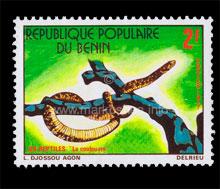
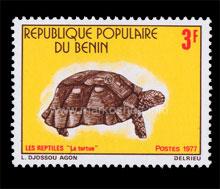
Two of four stamps, in a curiously incongruously titled series, feature reptiles but although the tortoies is probably a Bell's hingeback tortoise (Kiniyxs belliana) the identity ofthe snake is far less easy to discern since it may simply be a styalised snake of no particular species.
1999
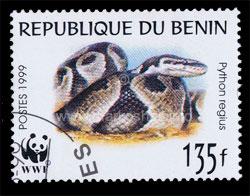
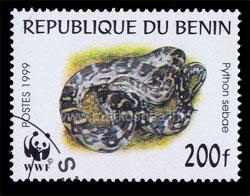
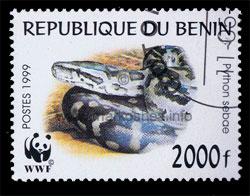
Four very attractive WWF stamps featuring the two python species occuring in West Africa. View the First Day covers for these stamps
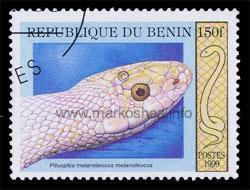
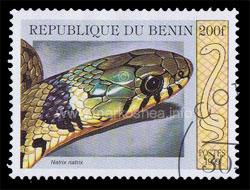
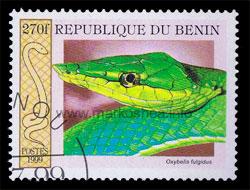
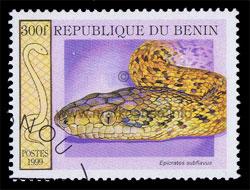
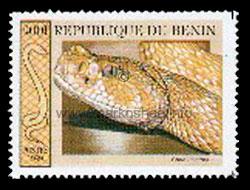
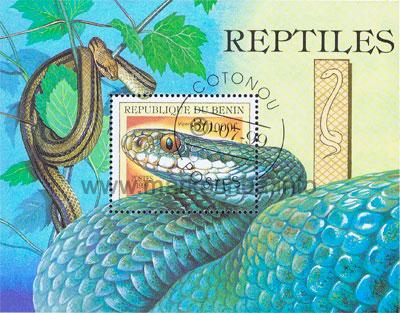
In the same year as the Pythons, an attractive but curious series of six stamps and one minisheet featuring eight snake species, none of them African, let a lone from Benin. The Aesculapian snake (Zamensis longissimus, the snake featured on so many caduceus symbols), Grass snake (Natrix natrix), Northern adder (Vipera berus) and the Four-lined snake (Elaphe quatuorlineata), in the minsheet border, are European, the Northern pinesnake (Pituophis melanoleucus melanoleucus) and Western diamondback rattlesnake (Crotalus atrox) are N.American, the Jamaican boa (Epicrates subflavus) is West Indian and the Green vinesnake (Oxybelis fulgidus) is Central American - an eclectic and unrelated collection. Also puzzling, why define the subspecies of the pinesnake, but not the grass snake of which numerous subspecies are well documented, and why mislead people into thinking the Northern pinesnake is a white snake, by exhibiting an albino specimen when this is generally a boldy-blotched subspecies.
2002
A sheet of snake stamps, none of them from Benin, although there was one African snake there, Bibron's stilleto snake (Atractaspis bibroni) from southeast Africa, a snake I know well having taken a bite from one. The other species are Asian: the pareatine White-spotted slug-eating snake (Pareas margaritophorus), homalopsine Crab-eating mangrove snake (Fordonia leucobalia) and Blackwater mudsnake (Enhydris punctata), and the curious colubrine Bearded snake (Fimbrios klossi), and one S.American snake, the dipsadine Big-headed snake-eating or thirst snake (Dipsas indica), in the very act of extricating a snail from its shell. A very curious mix of poorly documented snakes but with two species not identified on the stamps to species, and a genus mis-spelt, they could have used a bit more research on behalf of the designers. The Boy Scouts fleur-de-lis and Girl Guide shamrock on each stamp are also a puzzle (see below). These poorly designed lazy stamps appear for other countries too, ie. Congo-Kinshasa and Timor and the images are also used on stamps issued by Eritrea.
TORTOISES
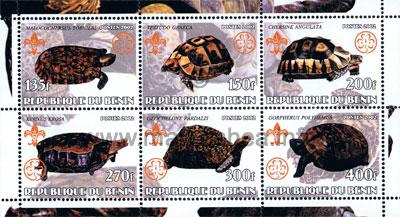
And a similar set of tortoises stamps, but with more African species than the previous series, ie. four, although only one occurs in West Africa, the Eroded hingeback tortoise (Kiniyxs erosa). The non-African species are the European spur-thighed tortoise (Testudo gracea) and the Gopher tortoise (Goperhus polyphemus) from N.America. This set may gain more African hits but it also scores more misses for typos, four mis-spelt generic names (from six) and one incorrect species. In addition one generic name has been changed but the designers could not have known about that. And once again, inexplicable symbols, the fleur-de-lis and shamrock again - is it cynical to suggest that this might be to maximise the appeal of the stamps for collectors with differing interests.
2003
Four gharish frog stamps, so bright they make the eyes hurt and again, not from W.Africa. Three European, even British species, including the recently renamed Natterjack (Epidalea calamita) and one Asian species, the Malayan horned frog (Megophrys nasuta). After the Python series above the more recent stamp sets are a) confusing and b) disappointing since they ignore the diverse herpetofauna of Benin, located on the coast of West Africa.
Associated links on this site:
|
|||||||||||||||||||||||||||||||||||||||||||||||||||||||||||||||||||||||||||||||||||||||||||||||||||||||||||||||||||||||||||||||||||||||||||||||||||||||||||||||||||||||||||||||||||||||||||||||||||||||||||||||||||||||||||||