The Maracá Rainforest Project had five sub-projects: Forest Regeneration;
Soils and Hydrology;
Land Use;
Medical Entomology, and
Floral and Faunal Inventory.
The Herpetofaunal Survey comprised part of the last of these.
Other parallel surveys considered various plants, especially trees, terrestrial & aquatic insects & molluscs, fish, bats, small mammals, monkeys & birds.
Maracá had a very rich flora and fauna with even large animals like deer, tapir, puma and jaguar being sighted around the research station.
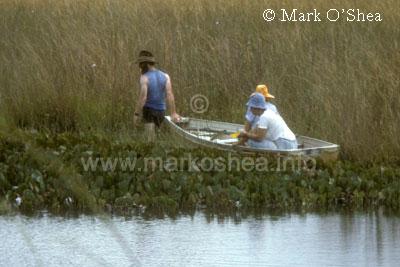
Mark doing his Charlie Alnutt impression
("The African Queen")
towing a boat containing two elderly Brazilian lady entomologists,
up and down the lagoon to enable them to
collect aquatic insects and snails.
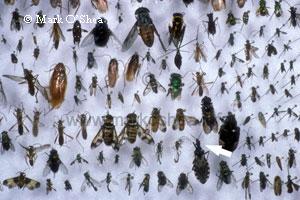
An insect voucher collection from Ilha Maracá.
(the white arrow indicates a reduviid 'kissing bug' the transmitter of Chagas Disease, American trypanosomiasis)
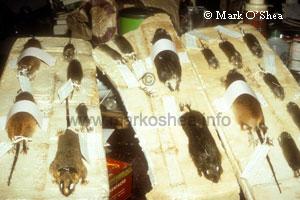
A small mammal voucher collection from
Ilha Maracá.
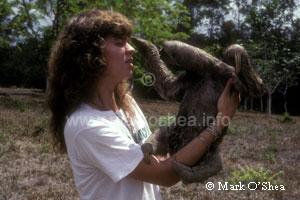
Primatologist Alexia Celeste da Cunha and "ET"
our orphan Pale-throated three-toed sloth, Bradypus tridactylus.
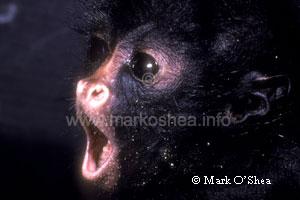
"Gooseberry"
our orphan Black spider monkey, Ateles paniscus.
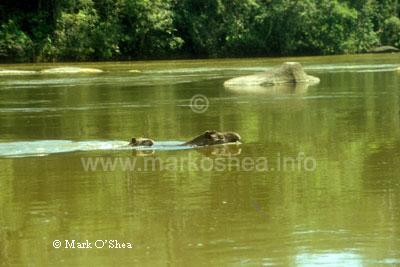
Mother and Baby Brazilian tapir, Tapirus brasiliensis, swimming across the Furo de Santa Rosa
from Ilha Maracá to the mainland.
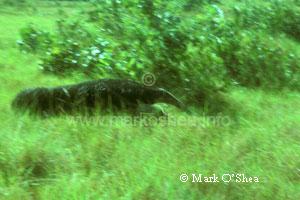
Fast moving Giant anteater, Myrmecophaga tridactyla, a regular sight on the savannas between
Boa Vista and Ilha Maracá.
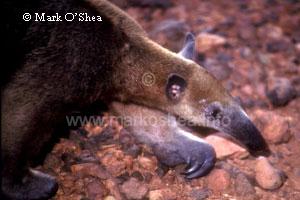
Tamandua, Tamandua tetradactyla, encountered on the road approaching Ilha Maracá.