|
|
||||||||


|
MAURITANIA & SENEGAL
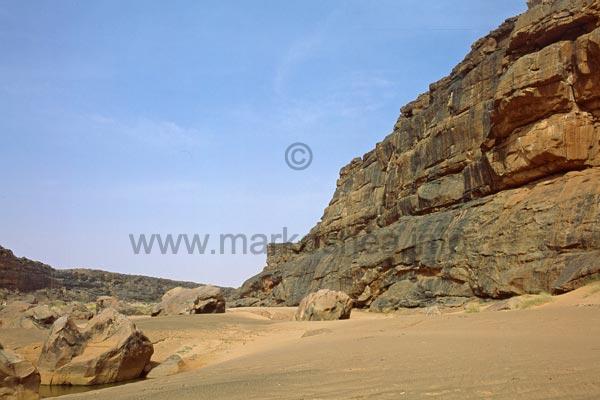
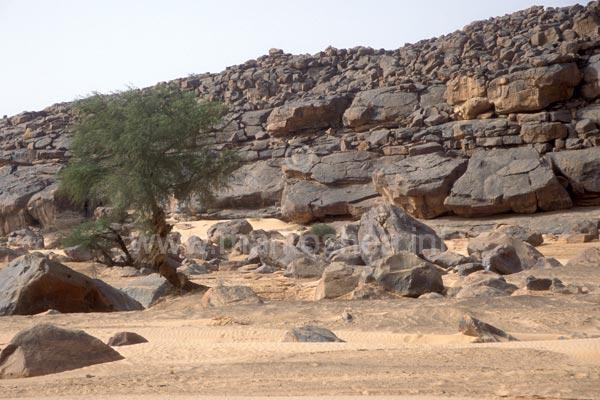
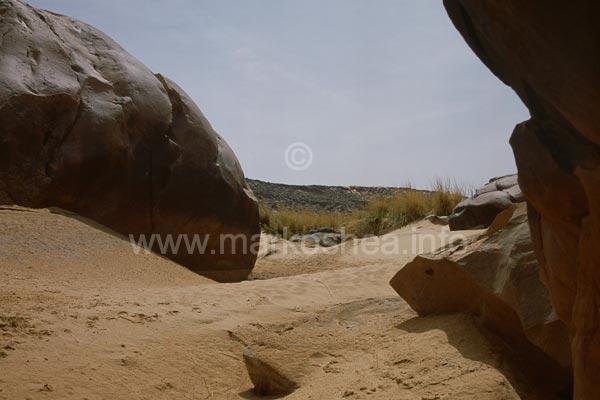
2003 "Crocodile Canyon" Oued El Glat & Hartéga Guelta, Tagant, Mauritania
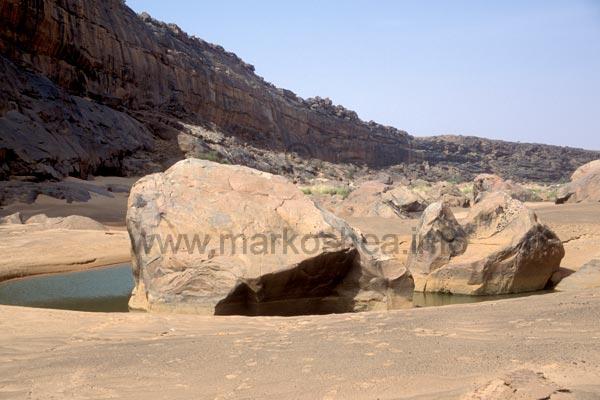
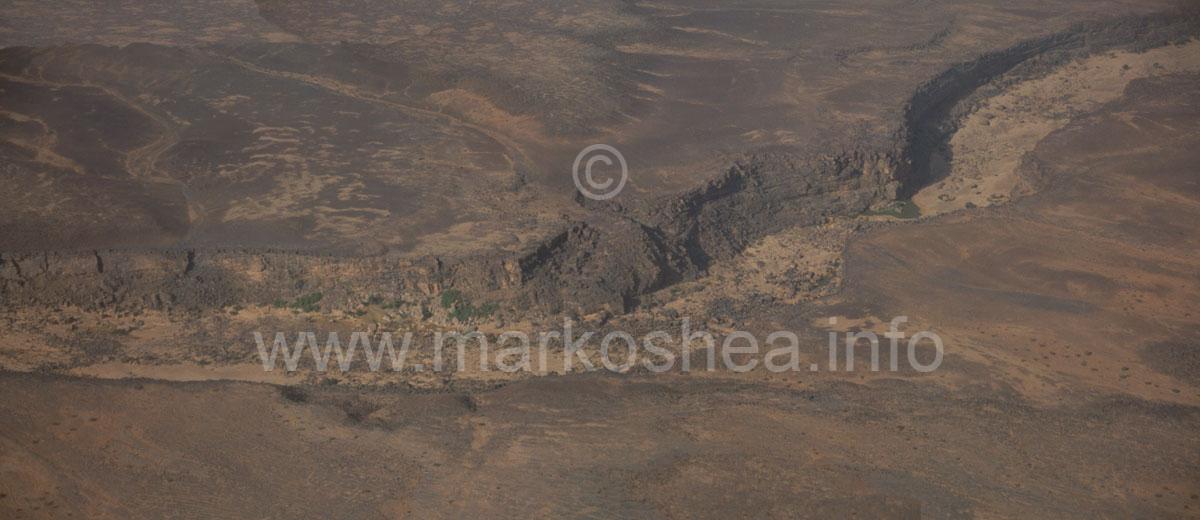
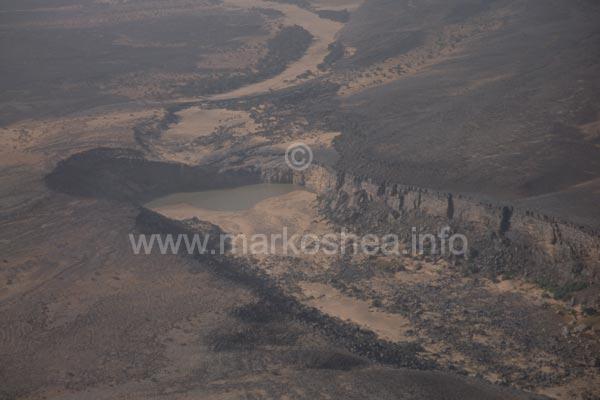
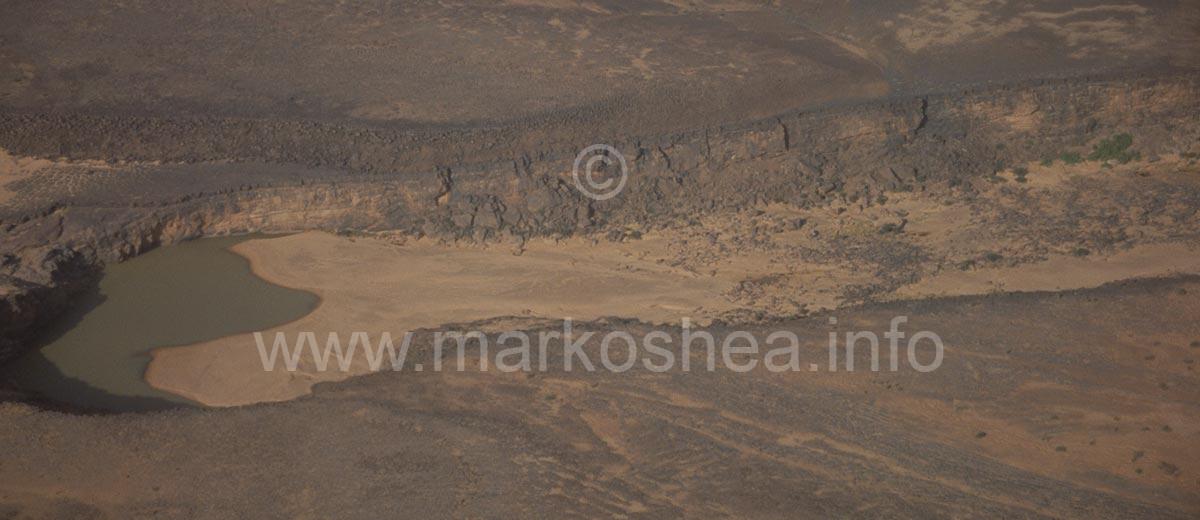
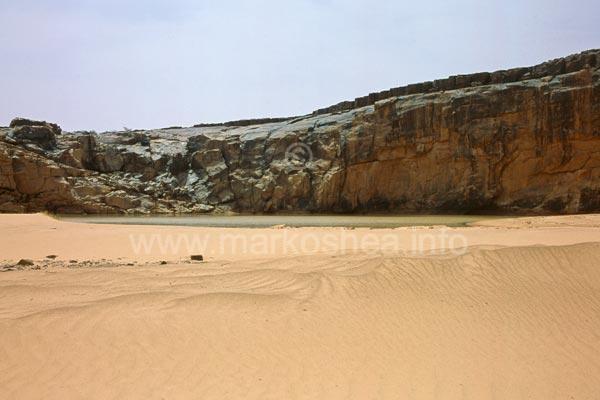
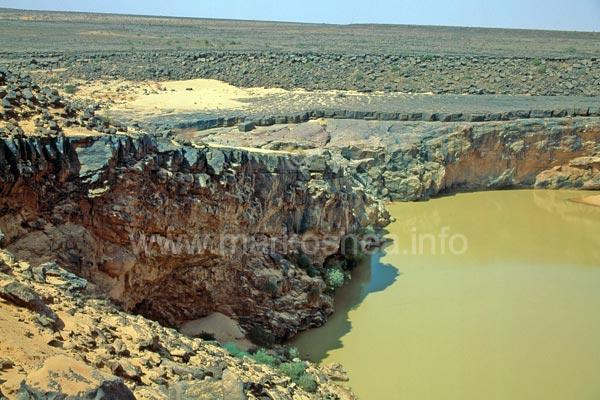
A guelta is a permanent or temporary pool fed by springs and surrounded by rocks. There are several small pools in the Oued El Glat which could be termed gueltas but the main one is Hartéga Guelta at the end of the gorge below a steep rocky waterfall, which was dry during our visit. This was our destination since it was the largest and deepest water course near Matmâta and the origin of crocodile reports. There were two ways to visit the Hartéga Guelta at the upper end of Oued El Glat, by walking up the valley or driving back down to El Marshra and up onto the Tagant Plateau to approach from above. Both required stealth as the Matmâta crocodiles are extremely shy and wary creatures.
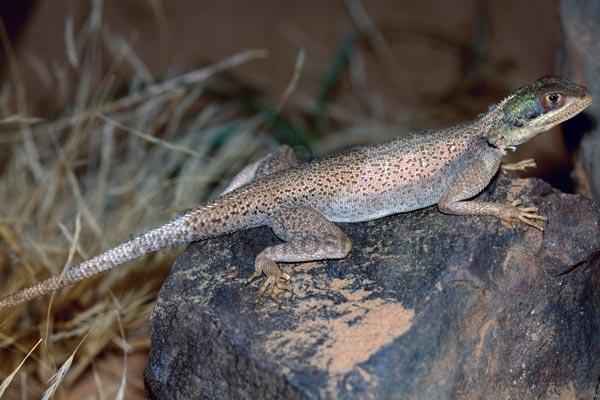
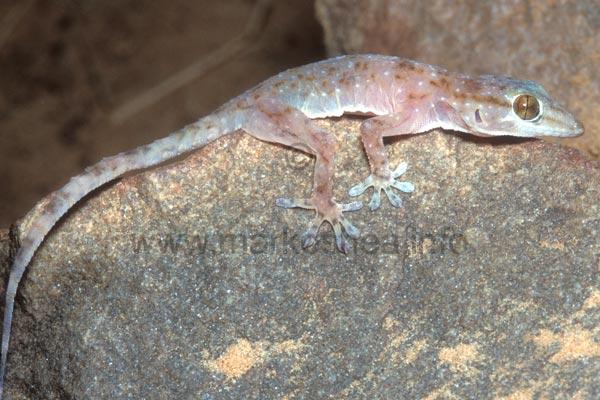
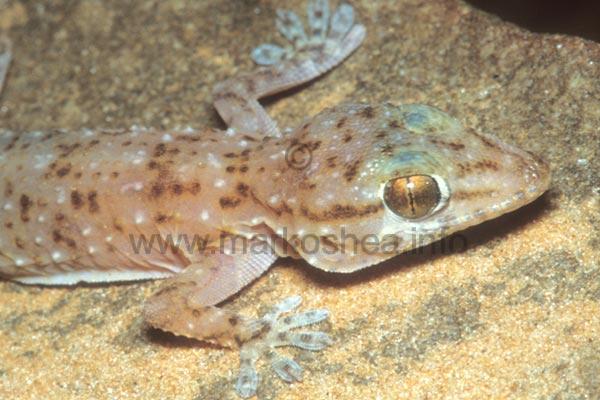
Walking up the Oued El Glat enabled us to check other possible gueltas for evidence of crocodile spoor ie. foot prints or tail-drag markings in the sand, we found Boulenger's agamas (Agama boulengeri) basking on the rocks and Senegalese geckos (Tarentola parvicarinata) lurking in the crevaces.
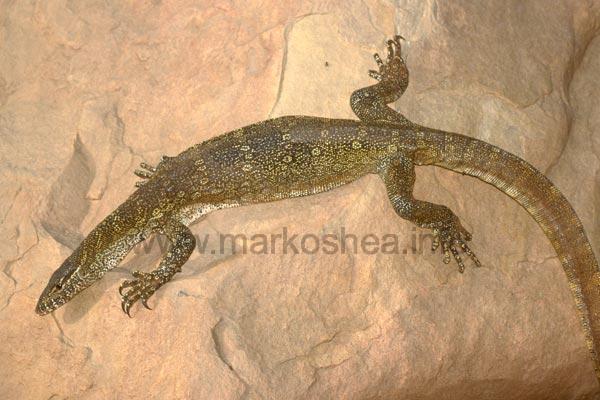
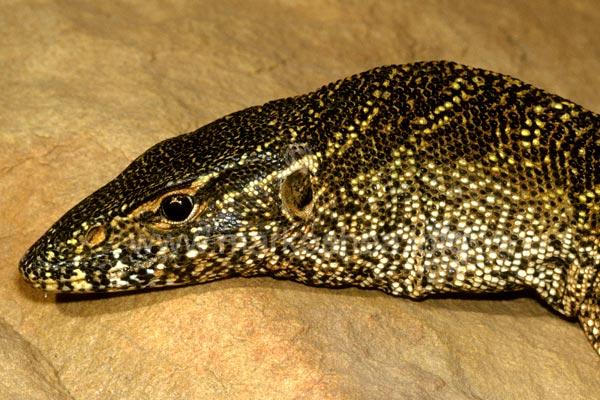
We checked every guelta we encountered and determined there were no crocodiles in residence. We did find evidence of Nile monitor lizards (Varanus niloticus) and eventually managed to capture one. Monitor lizards can make a living almost anywhere but this specimen looked like he was having a hard time finding much to eat.
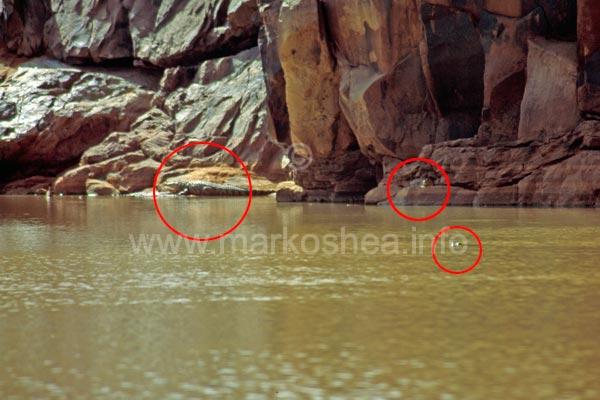
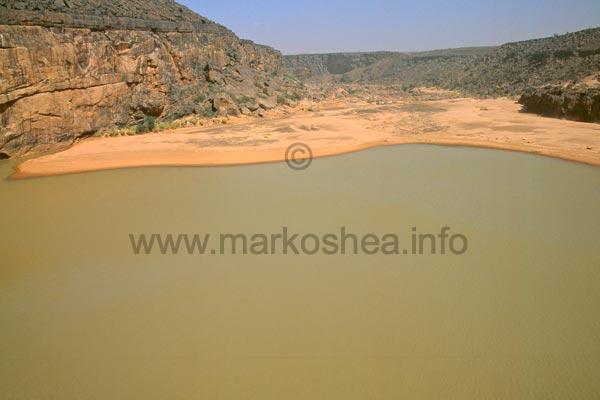
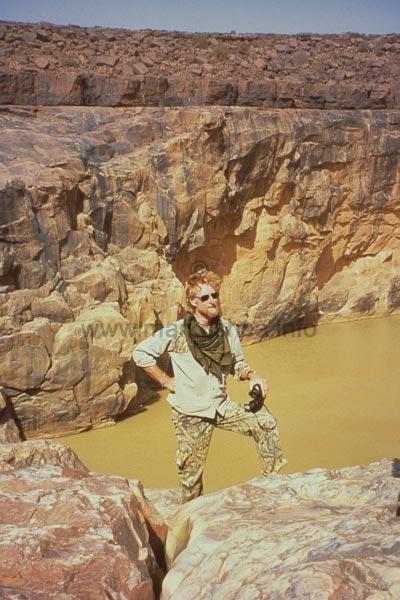
The Hartéga Guelta at the top end of Oued El Glat was much larger than any other guelta, and presumably much deeper due to it containing a waterfall plunge-pool. This was where the Matmâta crocodiles were first sighted and where they were believed to still exist.
It was important to use stealth when approaching the guelta to avoid spooking the crocodiles, so we approached low to the sand and tried to spot them through the shimmering heat.
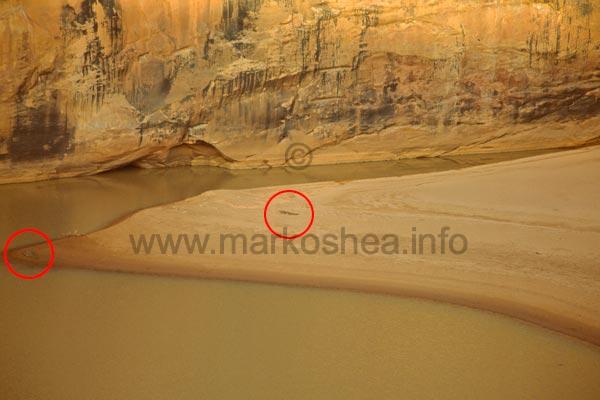
We made several visits to the guelta, via Oued El Glat, and saw crocodiles on most occasions. The crocodiles here are smaller than those in tropical Africa and warrent recognition as a separate species, the Northwest African crocodile (Crocodylus suchus).
We also visited the guelta via the elevated Tagant Plateau and were able to look back down the oued and locate any crocodiles on the sand bars.
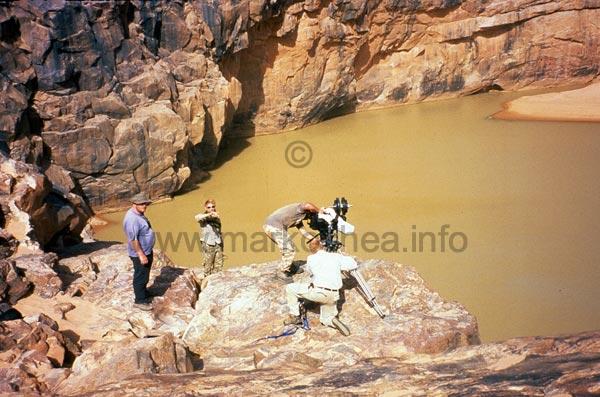
We rigged our second camera above the guelta for Jon Pinkney and left him there to film crocodiles as and when they appeared.
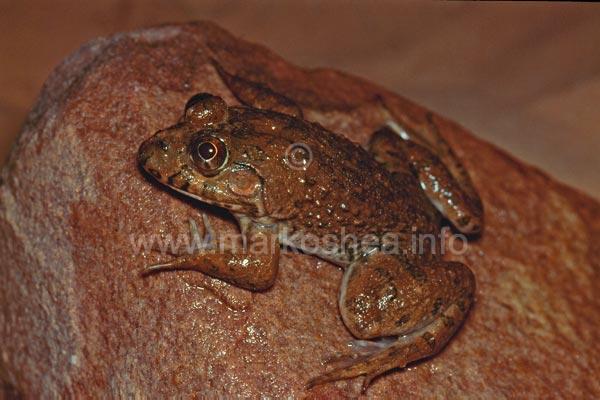
We also found the only amphibians of the expedition in the shallow water and grasses along the guelta wall. The Eastern groove-crowned bullfrog (Hoplobatrachus occipitalis) is a widespread Saharan species.
|
|||||||||||||||||||||||||||||||||||||||||||||||||