|
|
||||||||


|
MAURITANIA & SENEGAL
2003 "Crocodile Canyon" Lim Sherba, Tagant, Mauritania
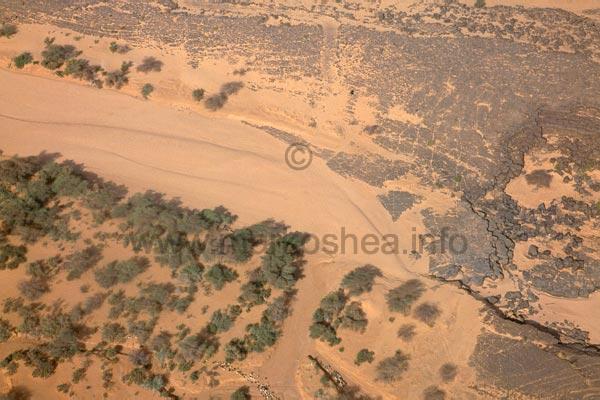
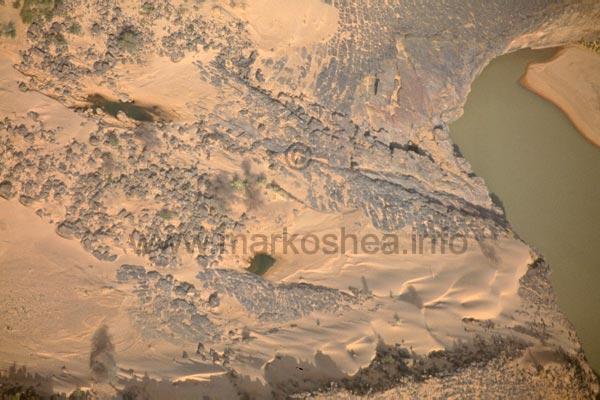
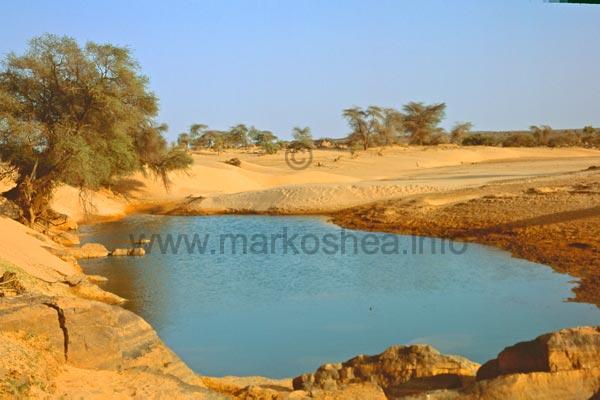
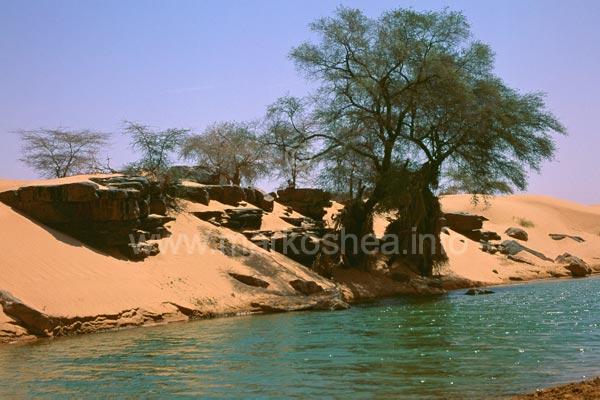
We decided to search for crocodiles above the Hartéga Guelta waterfall in the Lim Sherba area and were almost immediately rewarded with a potential sighting in a small guelta a few hundred metres back from the waterfall, and subsequent possibly sightings in other gueltas further on. Overall above the falls we estimated we had sighted five different crocodiles.
We met and interviewed nomads from the area and after much tea-drinking were told that crocodiles were found in many of the gueltas above the waterfall.
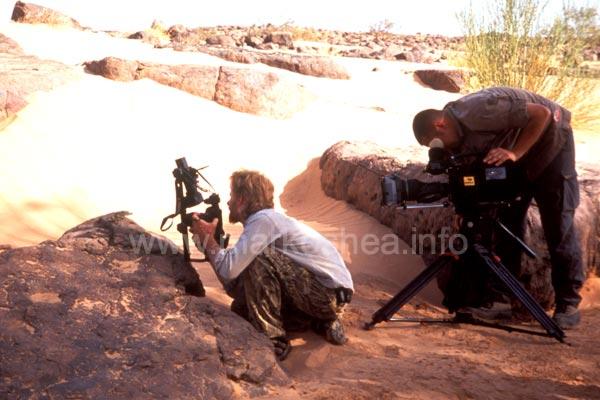
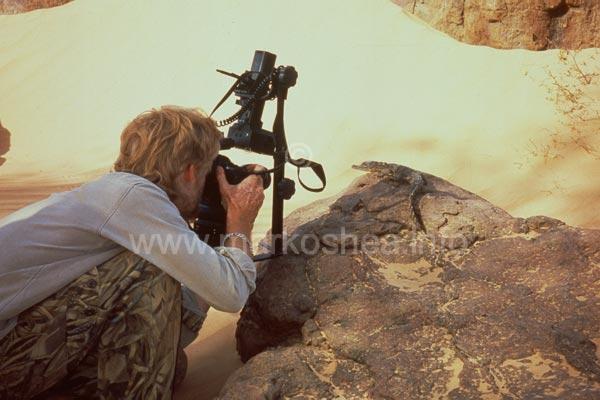
We set about trying to capture a specimen for photography, examination and DNA, searching by day and night.
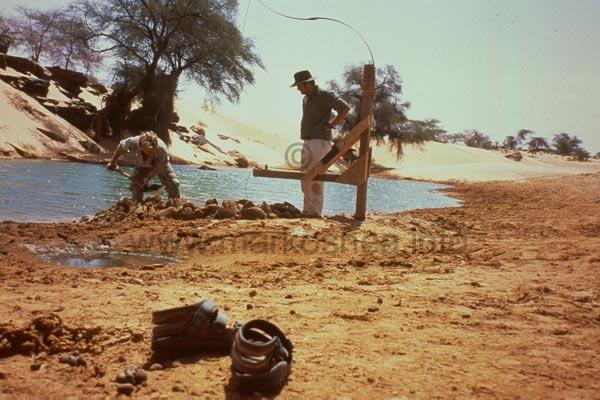
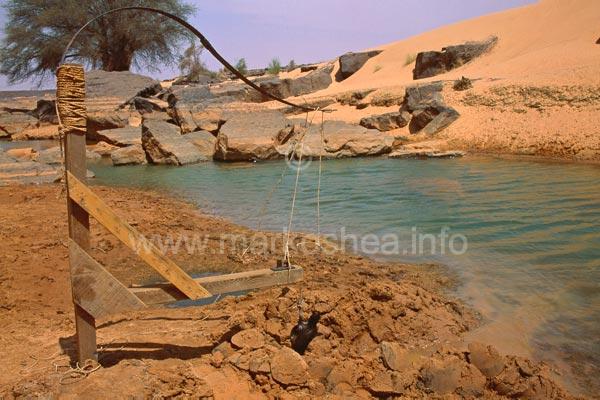
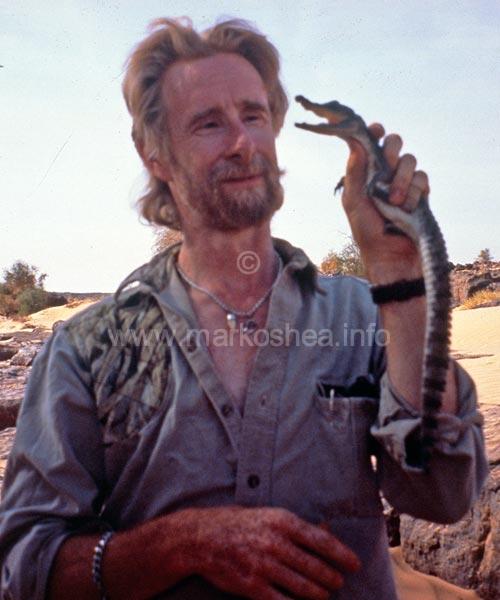
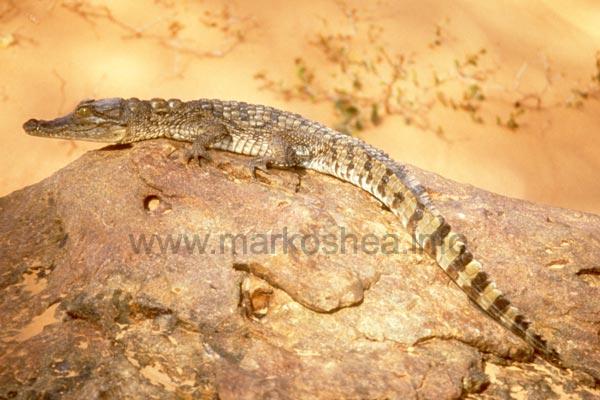
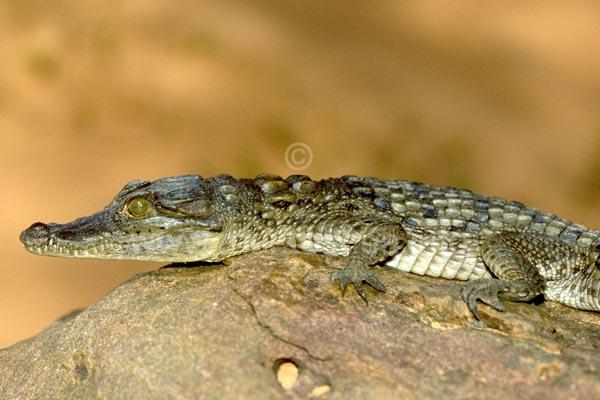
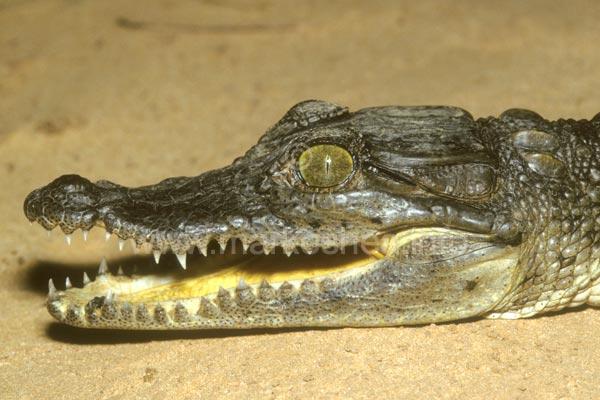
We set a crocodile trap at the first guelta where we had encountered a crocodile and also used large nets drawn through the water but we were unsuccessful. We did see Red-headed rock hyrax (Procavia ruficeps) amongst the rocks, the only non-domesticated mammals we sighted on the expedition. We searched with torches at night when the water in the gueltas was extremely cold to wade through, and eventually Hemmo located and captured a juvenile Northwest African crocodile (Crocodylus suchus) in a small guelta above the waterfall.
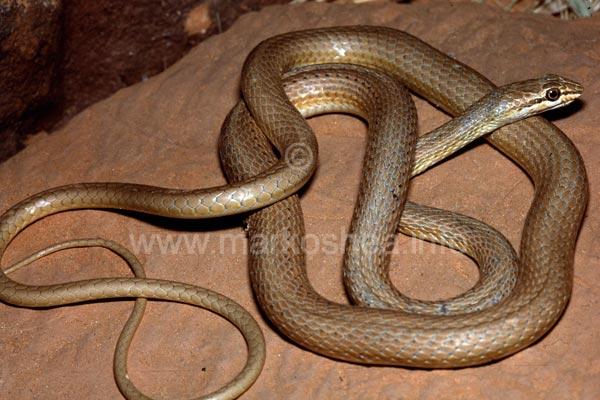
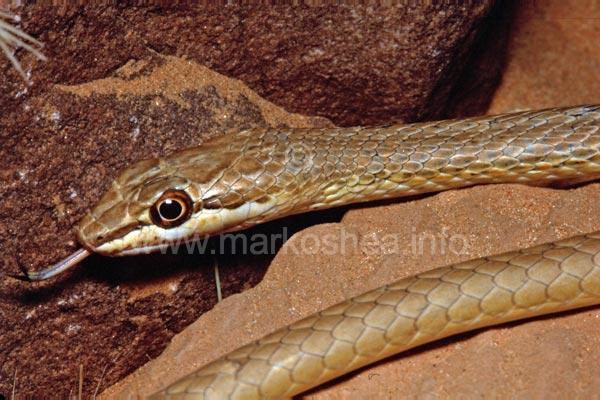
We also found what appeared to be subterranean caves under huge boulders where the adults were thought to be aestivating through the dry season. We also caught the only live snake of the trip at Lim Sherba. On evening we located a snake trail in the sand and followed it. Eventually we cornered a Schokari sandsnake (Psammophis schokari) which took refuge in the top-most branches of a spiny Acacia bush. It was well after dark by the time I had extricated myself and the sandsnake from the thorns.
|
|||||||||||||||||||||||||||||||