|
|
||||||||


|
ZAMBIA & TANZANIA
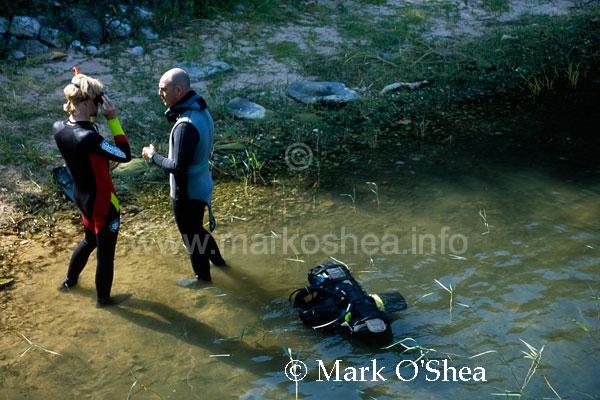
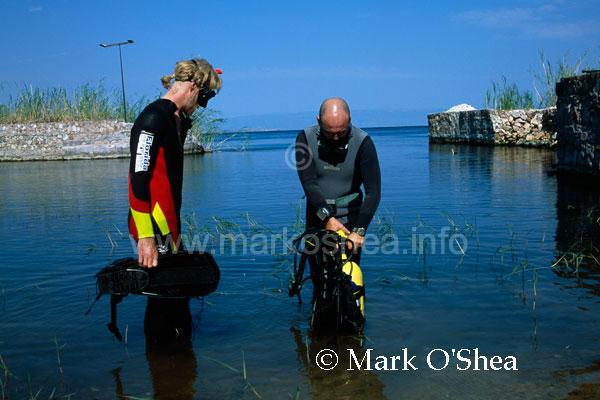
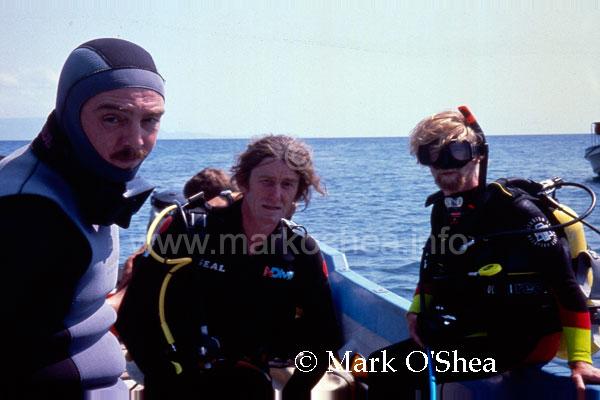
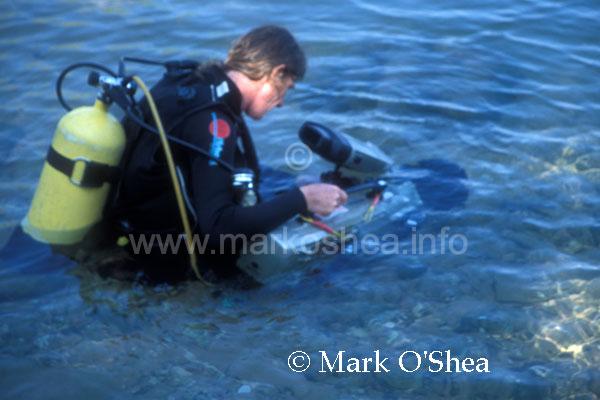
2003 "Water Cobra" Diving Lake Tanganyika The diving phase started on 19th June with the arrival the day before of Xavier Medina, a dive master from Zanzibar, American cichlid biologist Peter McIntyre, and second camera Jon Pinkney. Xavier and I went through a dive refresher at Kalambo Lodge as it was two years since I had dived in the tropics and then we set out to dive some of the favoured water cobra habitats at Luke's Bay and Isanga Bay.
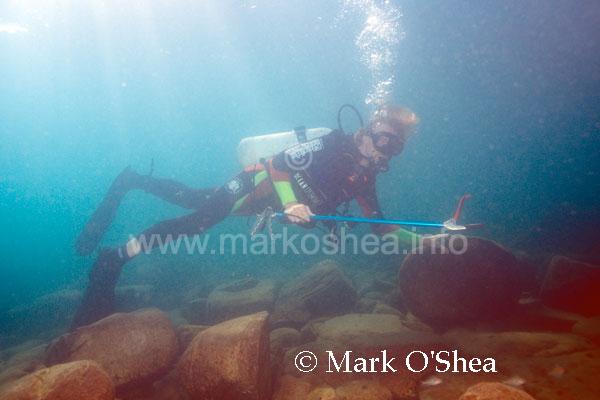
We completed early morning dives, daytime dives and night dives in the hopes of finding a water cobra swimming beneath the surface or emerging from cover.
Cameraman Des Seal took a new HD camera into the lake in an underwater housing, while Jon Pinkney took up second camera on the surface. Sound recordist Terry Meadowcroft recorded surround sound of the fish and everything else beneath the surface using a special contraption he had devised for the purpose.
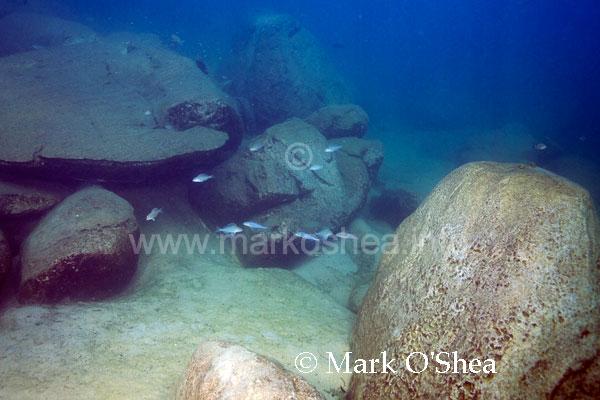
Despite plenty of fish life, including a diversity of cichlids and predatory Lates, we did not find any cobras and sighted only one Lake Tanganyika watersnake (Lycodonomorphus bicolor) beneath the surface.
While we were diving Michael Mbambiko told us that local fishermen had offered to bring water cobras from their nets and release them for me to capture in the water. We explained that our films did not work that way, we had to find the snakes by genuine methods and did not stage captured, but we asked that they release any cobras trapped in their nets.
|
||||||||||||||||||||||