|
|
||||||||


|
UAE & OMAN 2011
ARABIAN PHOTO HERP TRIP
Al Batayeh, Sharjah, UAE
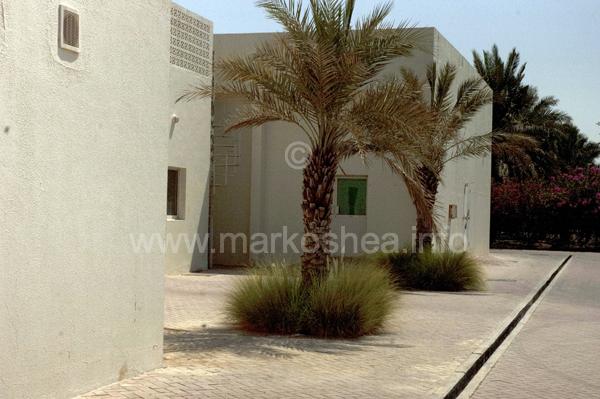
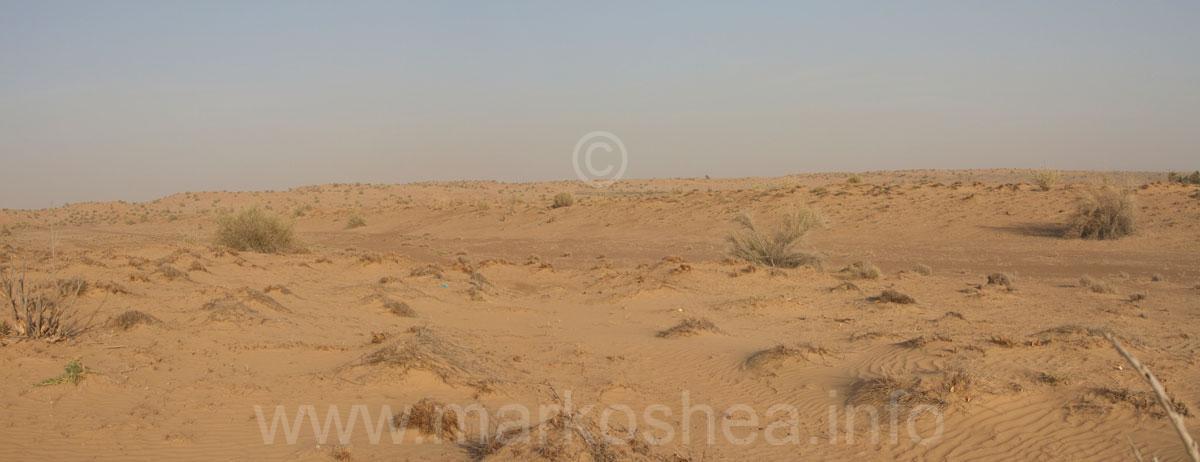
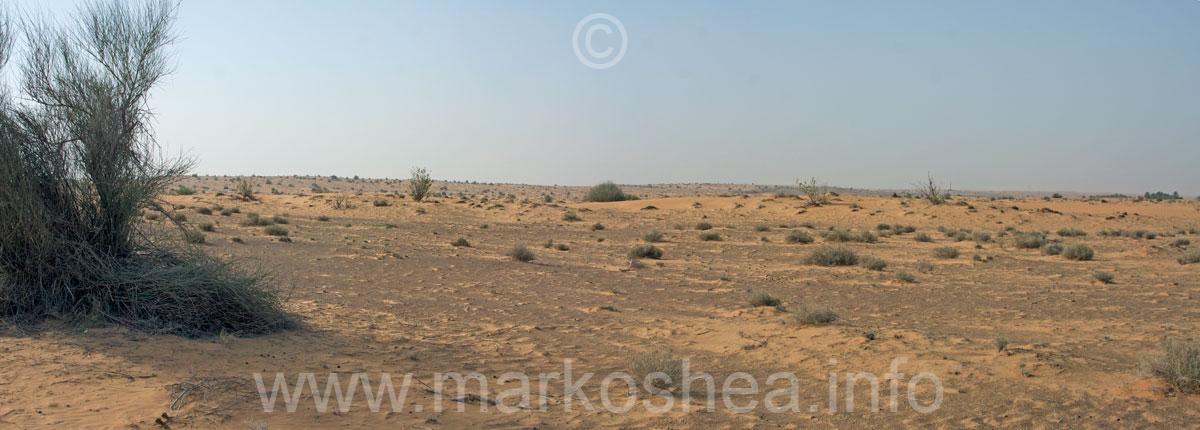
The Arabia's Wildlife Centre (AWC) is located in the Sharjah Desert Park (SDP) at Al Batayeh in the Emirate of Sharjah. The surrounding habitat is primarily sand desert with occasional dry wadis and gravel pans. This means that wild desert reptiles can be found not only in the desert surrounding the SDP but even within the grounds 2 sq km fenced Park. We mounted a number of escursions out into the desert during the morning, evening and night to search for reptiles (no amphibians would be expected in this habitat) and other interesting creatures.
The road to the back gate of the SDP leads directly into the desert, the white-lined tarmac being swallowed up by the sands a few metres beyond the gate. During the day we found the Yellow-spotted agama (Trapelus flavimaculatus) displaying on the kerb-stones along the road but the route really came to life at night.
At night we searched the road and found Arabian geckos (Hemidactylus robustus)*, Doria's short-fingered geckos (Stenodactylus doriae), and Southern tuberculated geckos (Bunopus tuberculatus) running along the kerb stones ...
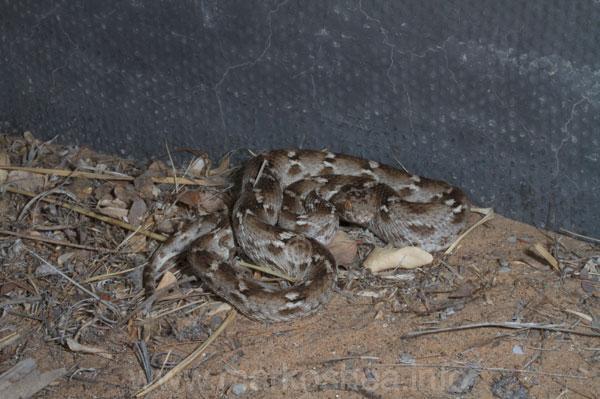
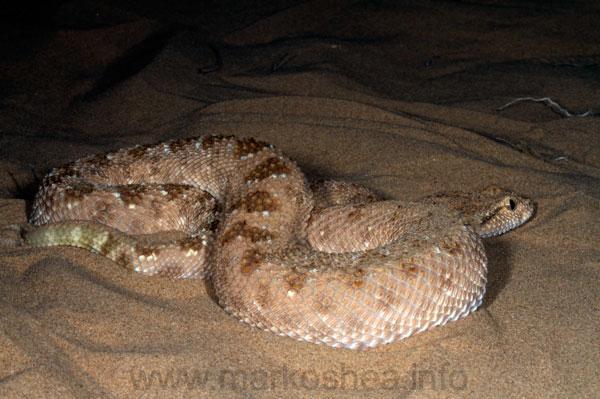
... and, just as Johannes predicted, we caught a Sindh saw-scale viper (Echis carinatus sochureki) sitting in ambush, waiting for them. * Several small Hemidactylus species may occur in eastern UAE, ie. Arabian gecko (H.robustus), Persian gecko (H.persicus) and introduced Turkish gecko (H.turcicus). Distinquishing between them required examination of the lamellae under the toes. We found several specimens and for now we are treating them all as Arabian geckos, pending more detailed examination.
Racing past at phenomenal speed, and unnervingly silent in the darkness, were Arabian camel spiders (Galeodes arabs).
The carpet viper was not the only snake found within the Sharjah Desert Park compound at night. We found an Arabian sand boa (Eryx jayakari) in the narrow moat that surrounds the Captive Breeding Centre as a deterant against ant invasion.
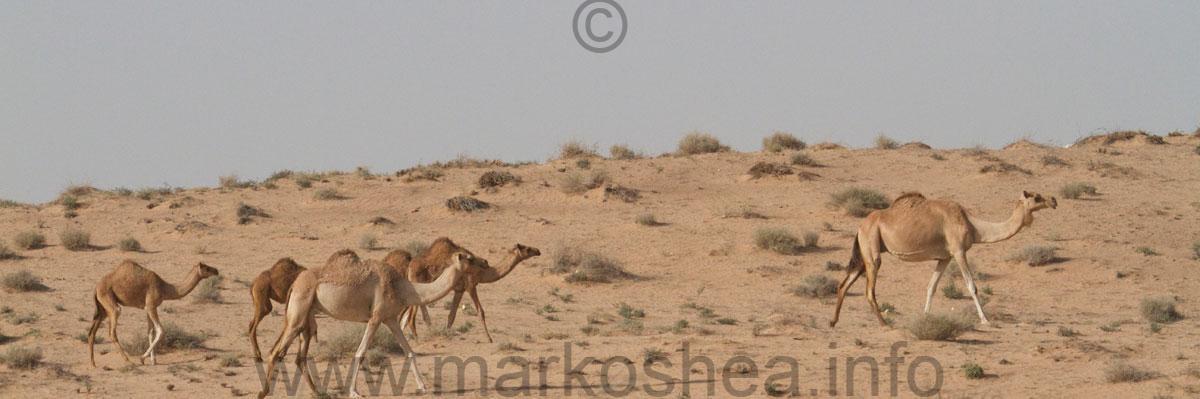
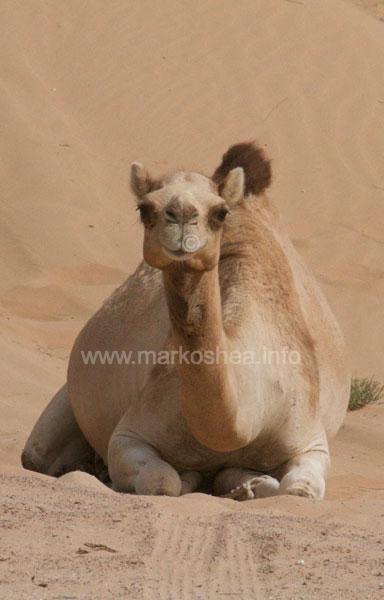
We drove and walked extensively in the desert beyond the fence during both the cooler parts of the day, and the night. Arabian dromedary camels (Camelus dromedarius) were ever present, distinguished from their Asian relatives the two-humped Bactrians (Camelus bactrianus), by their single humps.
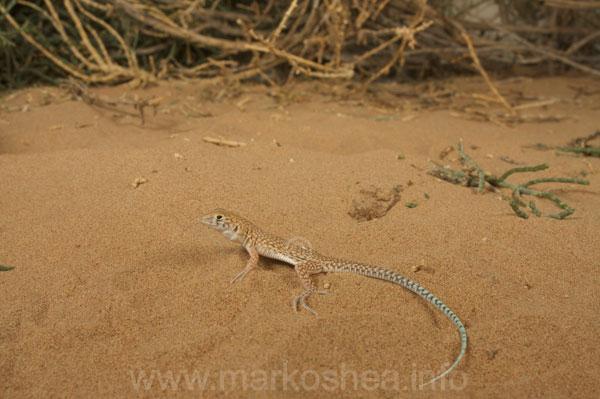
Few reptiles were visible on the dunes during the day although Arabian sandfish (Scincus mitranus), a sand-dwelling skink, would be sighted in the early morning sun, diving into the loose sand and 'swimming' to safety before it was possible to dig them out. We did eventually scoop one specimen, a subadult, into a fishing net. During the night reptiles were much more in evidence. Walking across the dunes we found more Doria's short-fingered geckos and Tuberculate rock geckos, but also Arabian short-fingered geckos (Stenodactylus arabicus) and Schmidt's fringe-fingered lizard (Acanthodactylus schmidti).
These small geckos and lacertids also have serpentine predators in the shifting sands and by tracking their trails over sand dunes and across gravel pans, we captured a Crowned leaf-nosed snake (Lytorhynchus diadema) and an Arabian sand viper (Cerastes gasperettii), this last requiring some 40minutes of tracking of its 'J'-shaped side-winding trail.
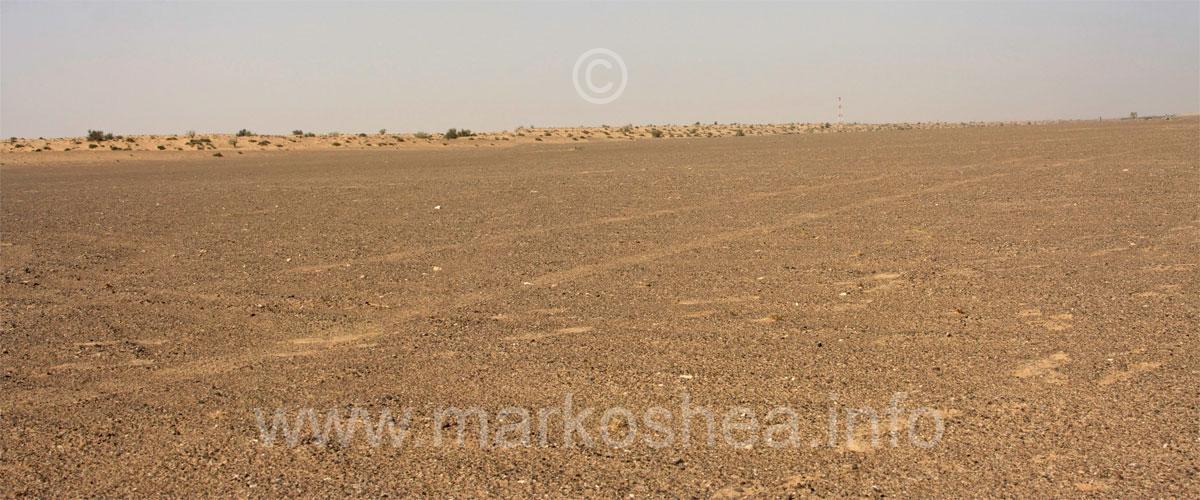
There are also numerous gravel pans between the sand dunes, some with vegetation and some without. These seemingly lifeless areas are actually home to several lizard species.
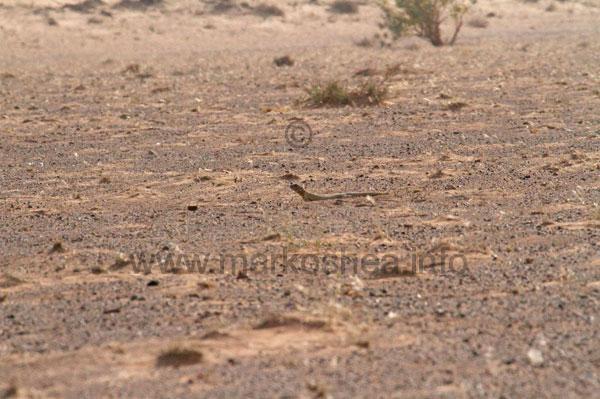
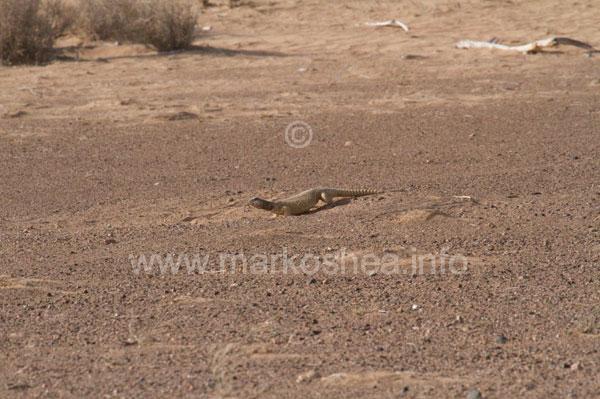
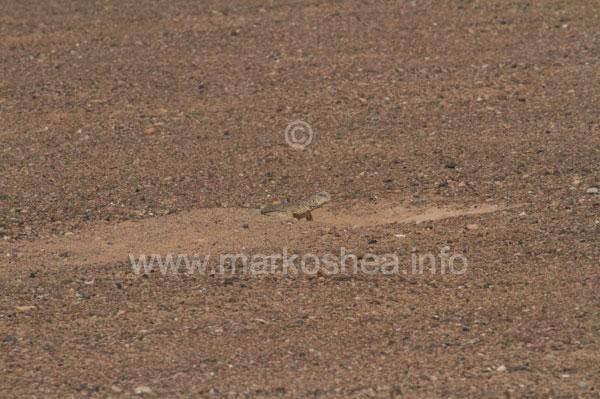
The most obvious lizards on the gravel pans are the Emirates dhab lizards (Uromastyx aegyptia leptieni), aformer full species now treated as a subspecies of the widespread Egyptian dhab lizard. The local subspecies is endemic to eastern UAE, northern Oman and the Musandam Peninsula.
A smaller agama, the Arabian toad-headed agama (Phrynocephalus arabicus) is also found around the clumps of vegetation on the less open gravel pans and flat sand plains.
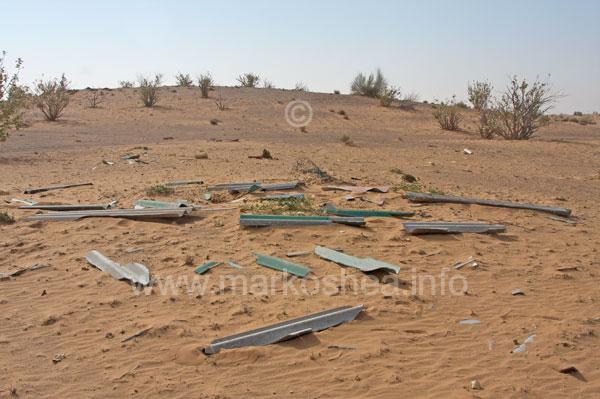
Sadly there is even trash in the desert, but this unsightly garbage can also be productive herp hunting territory and this was where we caught two specimens of a species of special interest, the curious Arabian worm-lizard (Diplometopon zarudnyi), an evolutionary advancement from the lizards, highly designed for a fossorial existance. Amphisbaenians are often overlooked yet they are a very interesting suborder of the Squamata.
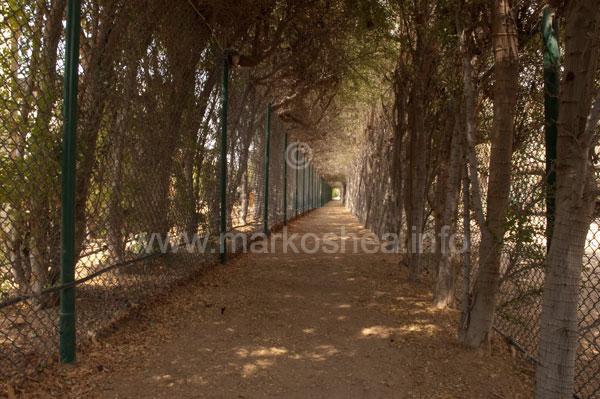
Our nocturnal patrols around the Sharjah Desert Park compound and the neighbouring desert produced most of our snakes but we also found occasional snakes during the day, such as three Afro-Asian sandsnakes (Psammophis schokari) that basked and hunted lizards and small mammals alongside the path between the Captive Breeding Centre and the Arabia's Wildlife Centre.
|
||||||||||||||||||||||||||||||||||||||||||||||||||||||||||||||||