|
|
||||||||


|
GREECE 2012
Greek Photo-Herp Trip
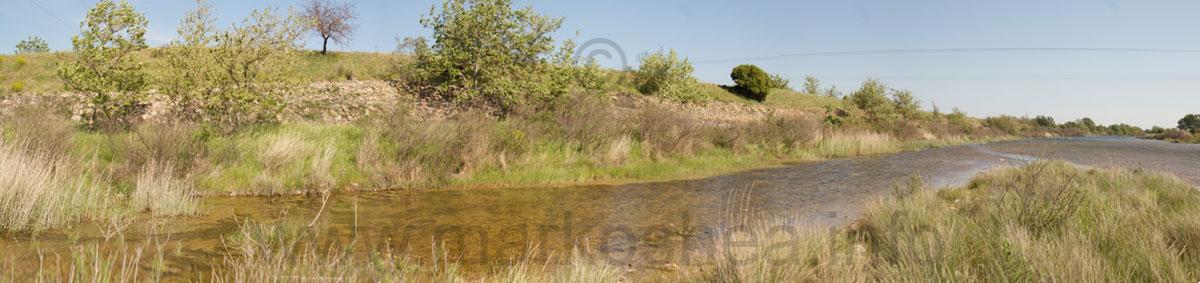
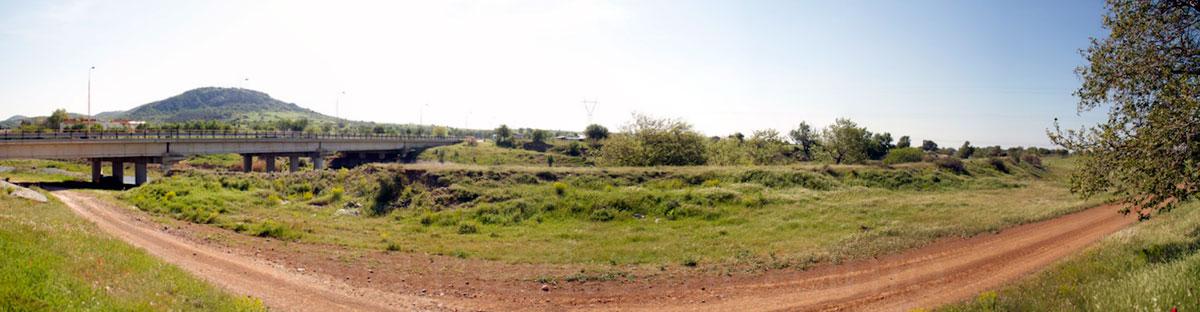
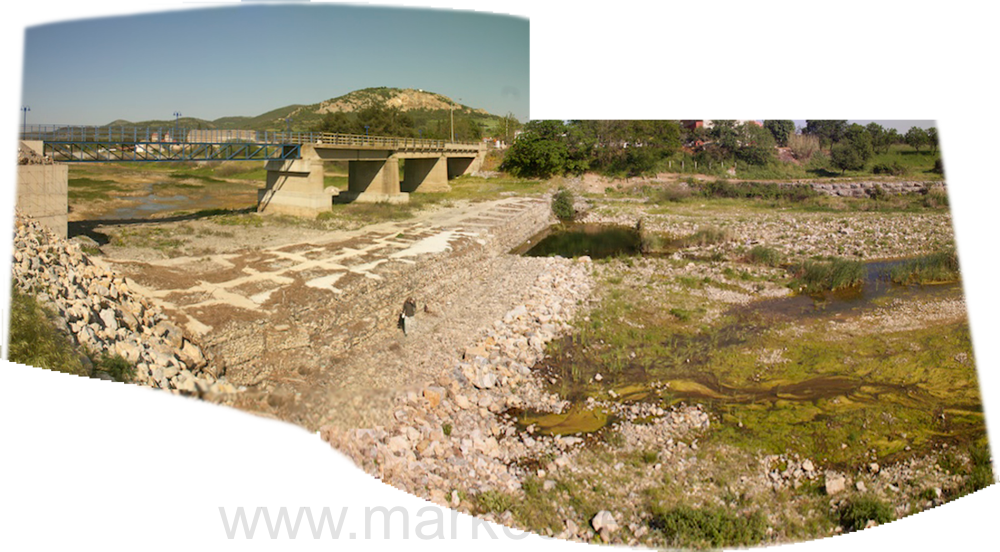
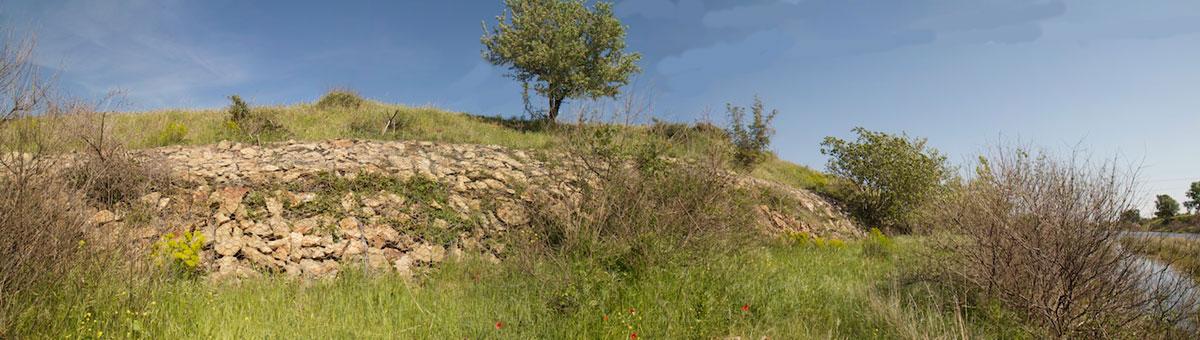
Loutrós, Thrace Province The river running through Loutrós rises in northern Thrace but judging from the extensive flood-barriers in place, and the width of the river-bed, it is clear this relatively small stream can become a rushing torrent when there is heavy rain in the mountains. We learn that the river valley was not only a good location for aquatic snakes, as would be expected, but also a good place to look for species not generally associated with water-courses, so we divided our time almost equally between the rocky hillsides and the river-banks, with short forays into the agricultural land on either side of the river.
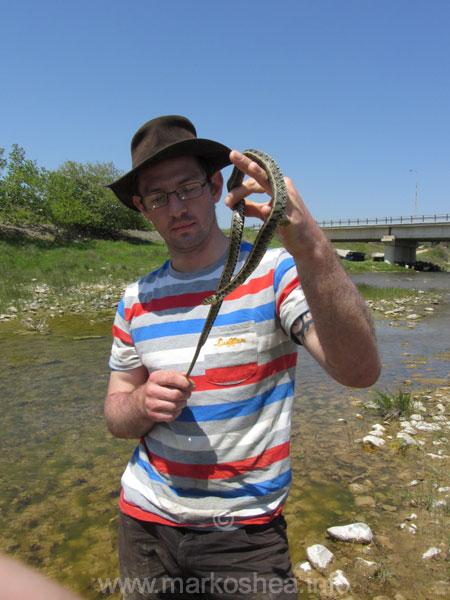
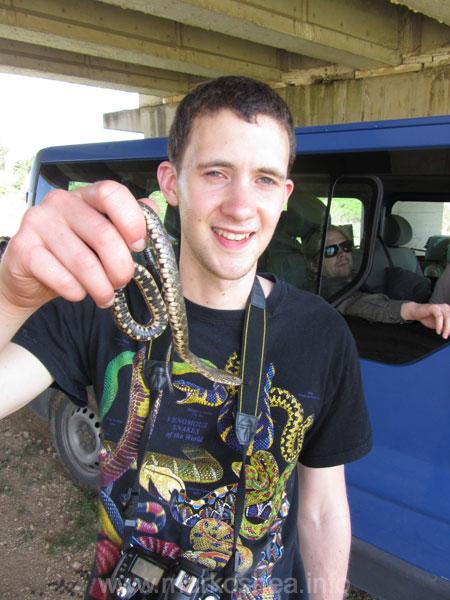
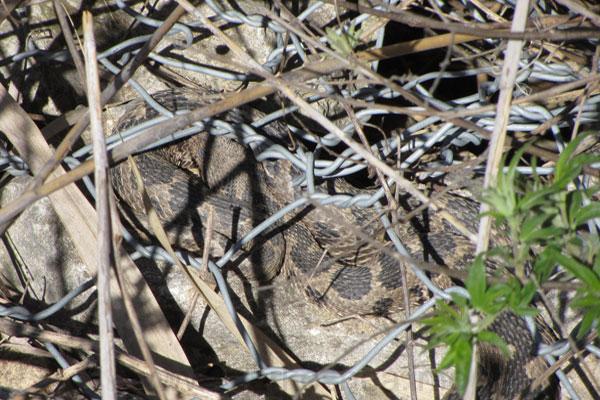
Searching along the river, in the shallows and on the islands, and along the dykes and other flood-retention features, by day and night we found a great many reptile and amphibian species: Mediterranean toad (Bufo bufo spinosus), Green toad (Pseudepidalea viridis), Common marsh frogs (Pelophylax ribidundus), Balkan terrapin (Mauremys rivulata), Greek pond terrapin (Emys orbicularis hellenica), Eastern spur-thighed tortoise (Testudo graeca ibera), Eastern Hermann's tortoise (Eurotestudo hermanni boettgeri), Caspian whipsnake (Dolichophis caspius), Balkan grass snake (Natrix natrix persa), Dice snake (Natrix tessellata tessellata), and even the occasional Ottoman viper (Montivipera xanthina).
Common marsh frogs (Pelophylax ridibundus) abounded on the grassy islands and in the shallow channels between them, and at night the air resounded with the cacophony of their calls.
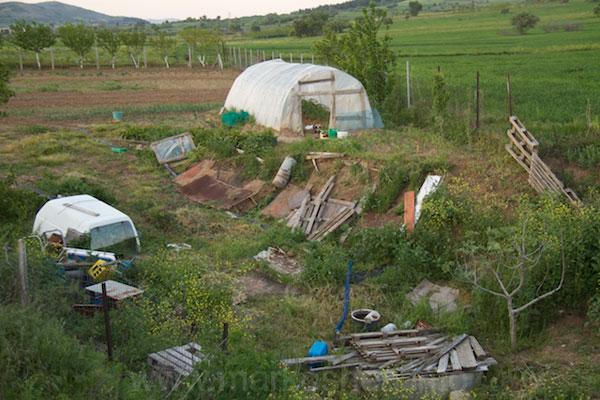
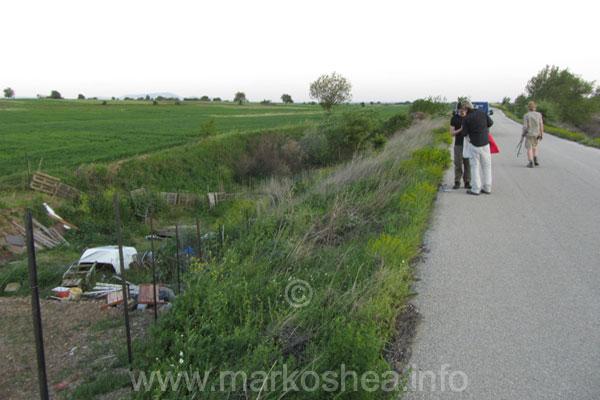
In a road-side dump attached to a small garden we found two Caspian whipsnakes (Dolichophis caspius), a juvenile and a stump-tailed adult) sheltering under flat boards.
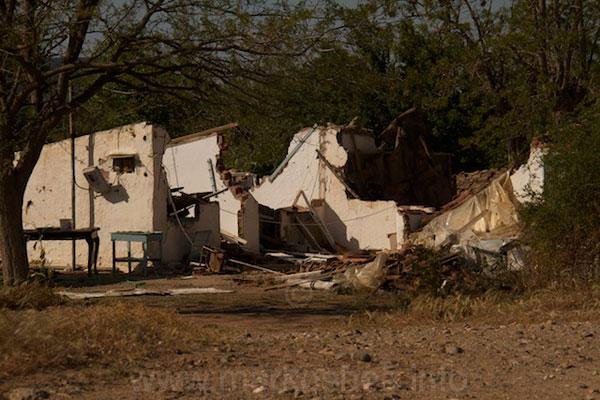
In the ruins of a farmhouse Øyvind and I found a juvenile Balkan grass snake (Natrix natrix persa) and believe there may have been even more snakes but the dangerous state of the building made further exploration too hazardous.
The pools under the footbridge were excellent places to find Balkan grass snakes (Natrix natrix persa) and Dice snakes (Natrix tessellata tessellata).
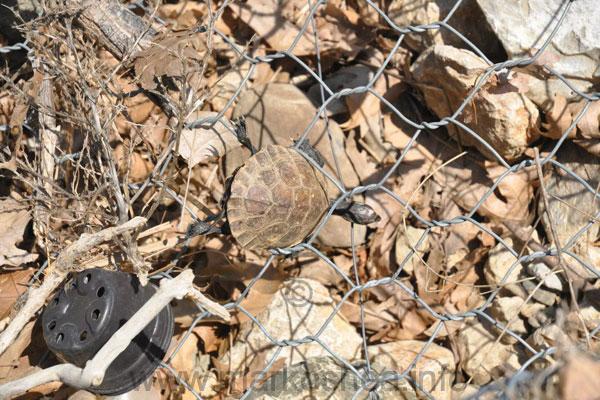
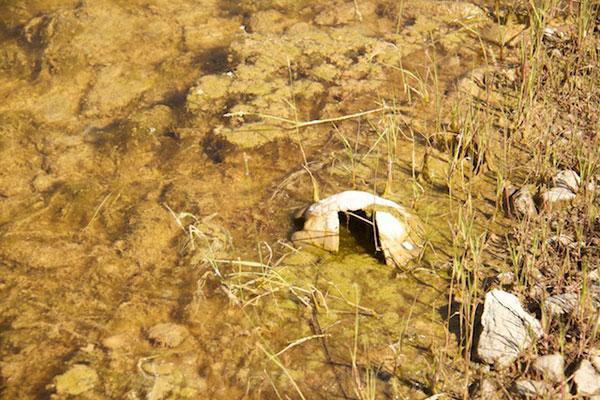
Extensive rocky dykes have been constructed to hold back the flood waters from the arable lands of the floodplain and these rocks create a natural man-made microhabitat for reptiles, in which they are protected from predation and capture by the thick wire-mesh holding the entire structure together, but this same protective mesh may be a death trap for turtles and tortoises, several bleached carapaces being found wedged between the rocks or washed into the mud at the dyke's feet. On the rocks in the sunlight we found the Beautiful jumping spider (Philaeus chrysops), a stunning species, males being boldly patterened with red and black. Green bush crickets (Isophya or Poecilimon sp.) were present on the vegetation.
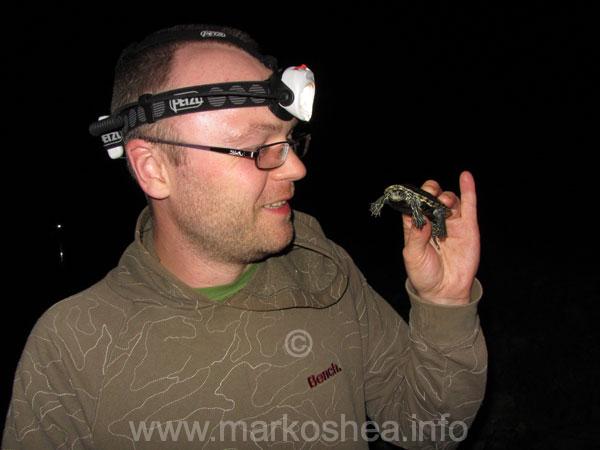
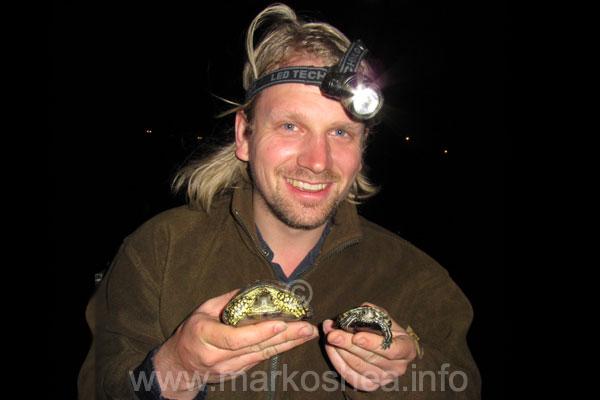
Our nocturnal foray onto the river with Benny Trapp resulted in the capture of both species of freshwater turtles: Balkan terrapin (Mauremys rivulata) and Greek pond terrapin (Emys orbicularis hellenica) as well as Common marsh frogs (Pelophylax ridibundus) and a large Mediterranean toad (Bufo bufo spinosus).
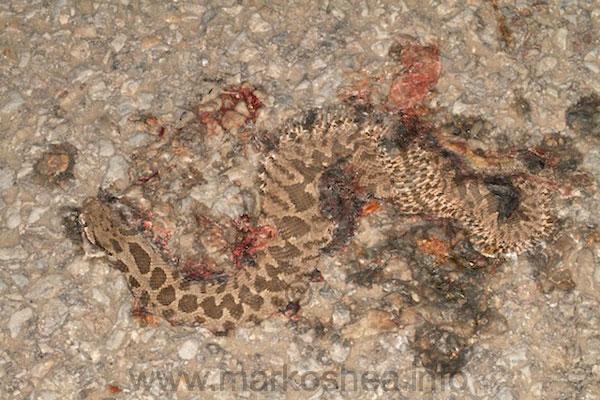
On the road near the town, where we parked our cars, we found a road-killed juvenile Ottoman viper (Montivipera xanthina).
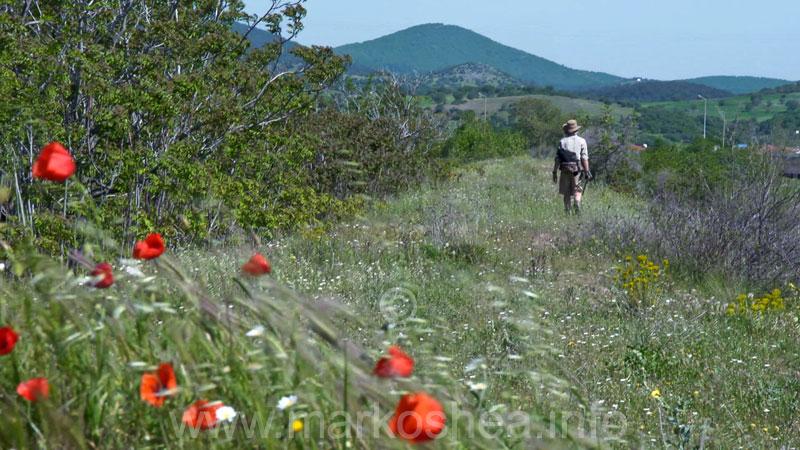
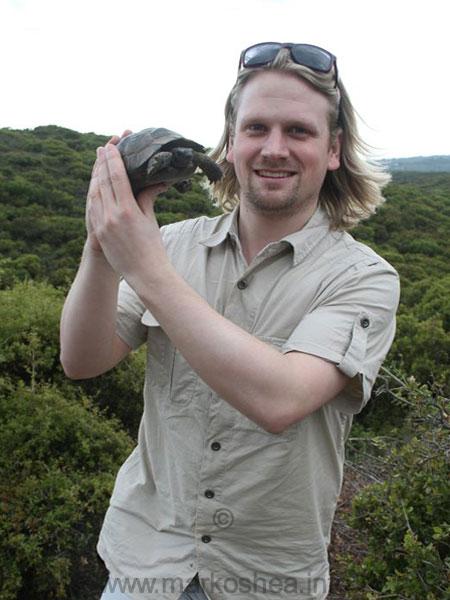
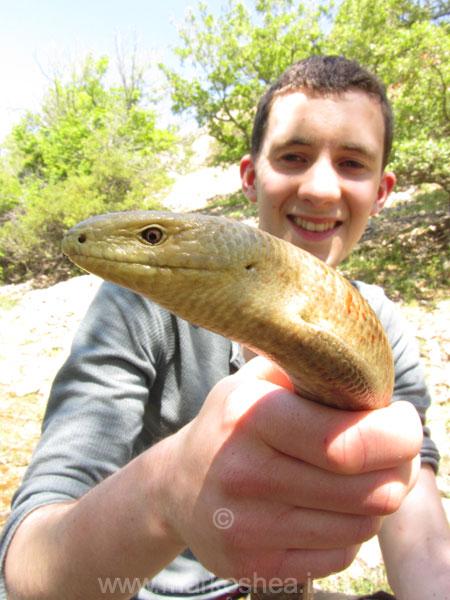
In the hedgerows around the agricultural areas we hoped to find Northeastern nose-horn vipers (Vipera ammodytes meridionalis) but only found Eastern Hermann's tortoise (Eurotestudo hermanni boettgeri), Balkan green lizard (Lacerta trilineata trilineata) and Thracian scheltopusik (Pseudopus apodus thracius).
|
|||||||||||||||||||||||||||||||||||||||||