|
|
||||||||


|
NAMIBIA 2007
Ongava Game Reserve Herpetofaunal Survey
Field Techniques and Results
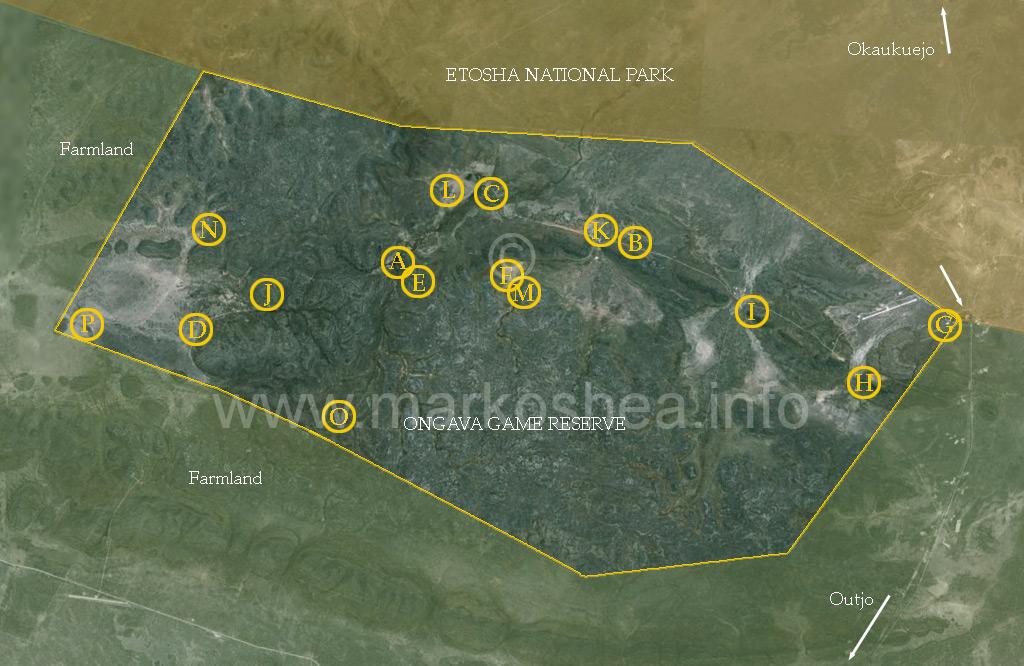
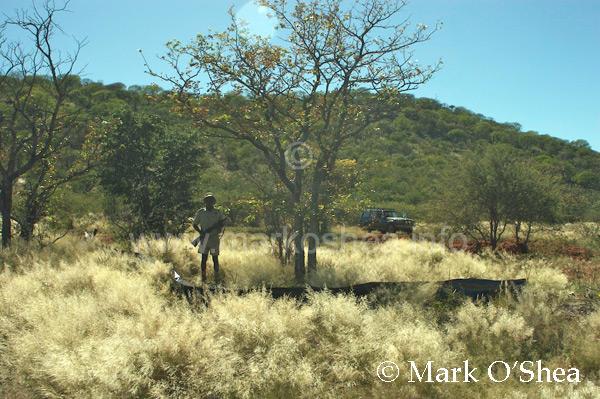
We set two drift fences with ten and nine pitfall traps respectively at location E & F, each of which was examined daily for a period of two weeks. The fence lines consisted of length of black plastic sheeting supported by canes, with their bottom edges buried in the ground. The fence lines passed over a series of buckets, spaced 2.0m apart into which any small animals might fall if they met and followed the fence line. The drift fences were set in very different habitats, in mopane woodland besides the Allan Dam, and in an area of dry grassland on a red sandy soil. Despite the hopes for fossorial and semi-fossorial species, yield from the pitfall traps was low, with only six (8%) reptile and amphibian specimens, and some scorpions, being recorded during the actual survey period. At a time of heavy rainfall they might be more successful when burrowing species are forced onto the surface. Most specimens were recovered during micro-habitat searches near man-made structures, including masonry around the old farmhouses (61 of 85 collected during the actual survey). Lizards were noosed, chased into corners or slap-captured, while the majority of the larger snake specimen captures arose from responding to staff sightings.
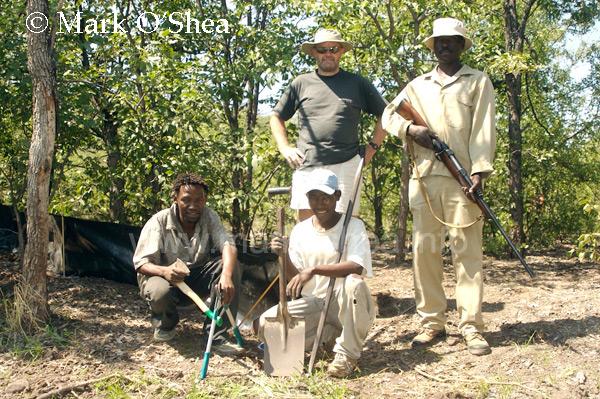
However, Ongava was unlike many other places I have worked (Papua New Guinea, Timor, Borneo, S.America) in that it has a large population of top carnivores, primarily lions but also leopards, and working in the field is extremely dangerous without a member of the team on permanent guard duty. To this end we took Frans Nujoma, an OGR gun guard, with us whenever we checked the drift fences or walked in the bush.
Also included in the survey data were species collected as dead on road (DOR = 1 species), or species photographed by KS before (PR = 5 species) or after (SP = 7 species) the actual survey, the identify of which was either made, or confirmed by MOS. Given the small number of amphibians recorded, and the general lack of fossorial reptiles observed, we suggest that this survey reflected the incidence of herpetofauna typical of the dry season and proposed repeating the survey at the start of the rainy season when funding became available.
All specimens encountered were photographed extensively by MOS using a variety of techniques. KS has continued to photograph specimens since the completion of the initial phase of the herpetofaunal survey. Whenever the opportunity for a foot safari presented itself we took it. We searched the rocks about Ongava Tented Camp in the vain hope of finding the Angolan python (Python anchietae) by using a heliograph to shine bright sunlight into the deepest cracks and crevices in an effort to locate sleeping pythons.
|
||||||||||||||||||||