|
|
||||||||


|
PAPUA NEW GUINEA 2006
Karkar Island
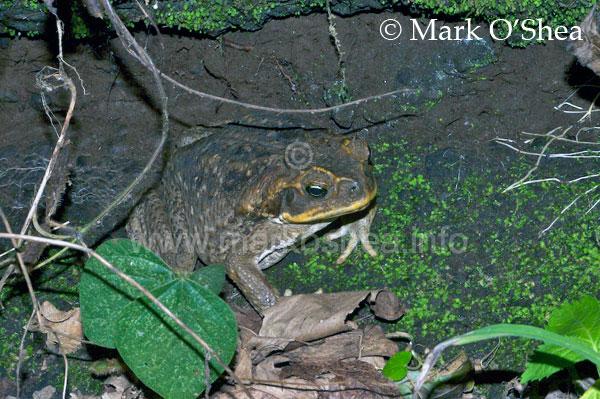
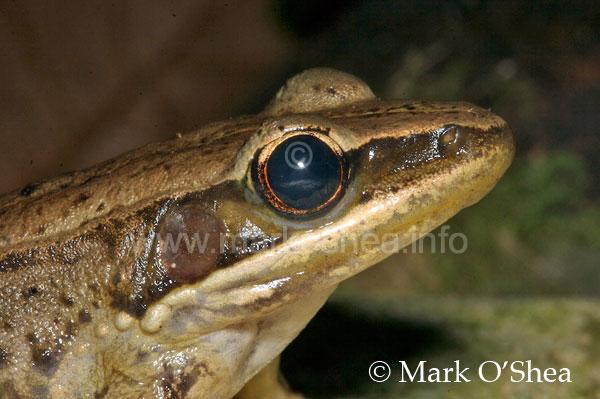
[see also visits to Karkar Island in 1990, 1993, 1994, 2000 & 2008] The known herpetofauna of Karkar Island has been increasing with every visit to the island. The amphibians and reptiles can be loosely separated into those associated with the coconut husk piles and those found in other habitats, ie. bush, gardens, beach, cocoa trees, coconut palms. The species illustrated here are those not intimately associated with coconut husk piles (click here for husk pile species), although some of them do turn up in husk piles, especially snakes in slough, and neither is this the full compliment of species recorded from other habitats, but rather those species encountered during the 2006 visit to the island. The amphibian fauna is unfortunately dominated by the introduced, highly toxic Cane toad (Rhinella marina) which has been on the island for many years. We generally ignore this species but Bina did find a very large specimen in a hollow in a barat during a night search which was impressive enough to photograph. The other non-husk pile amphibians encountered were the Northern Papuan wood frog (Hylarana papua) on the ground, and large White-lipped treefrogs (Litoria infrafrenata) in the trees at night.
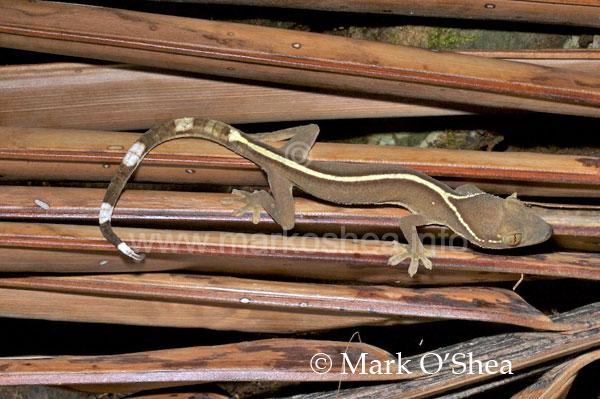
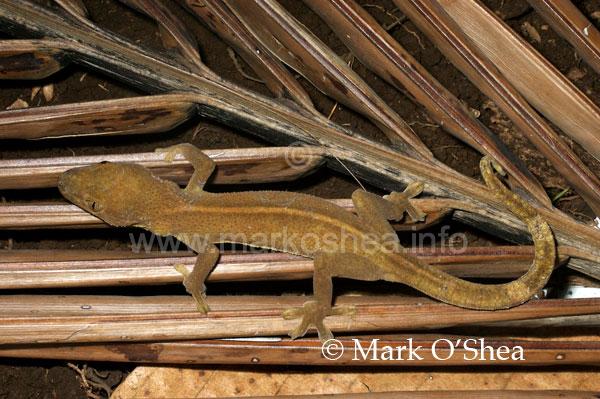
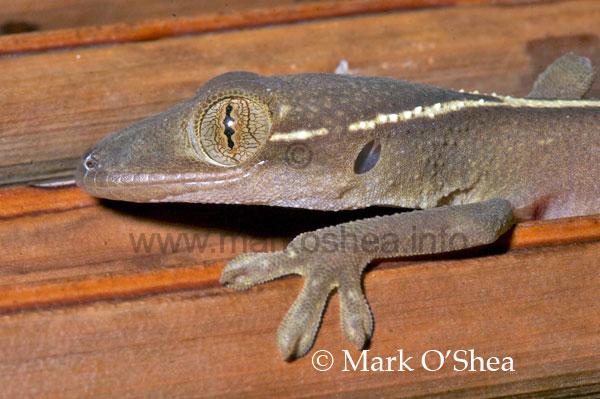
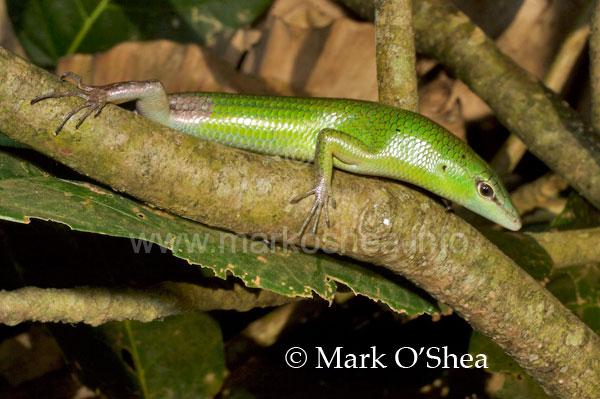
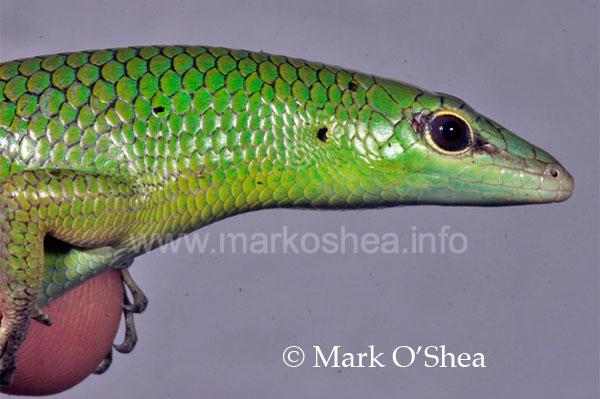
The Palm gecko (Gekko vittatus) is a common species encountered at night on coconut palms, while the Emerald tree skink (Lamprolepis smaragdina) is found by day on cocoa and other trees.
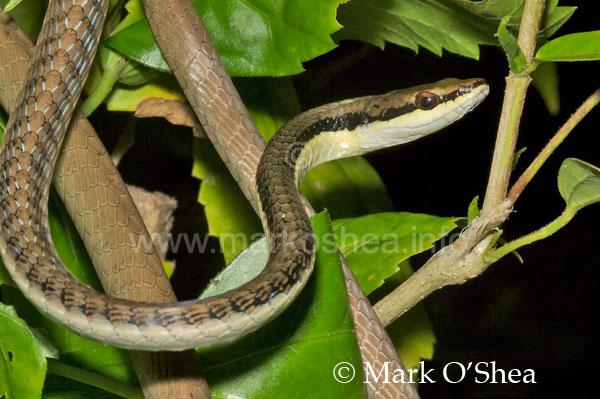
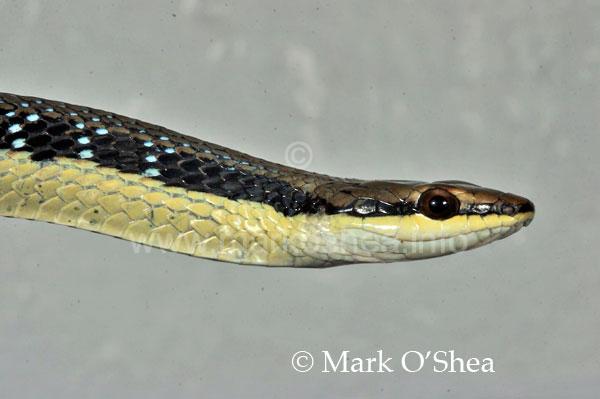
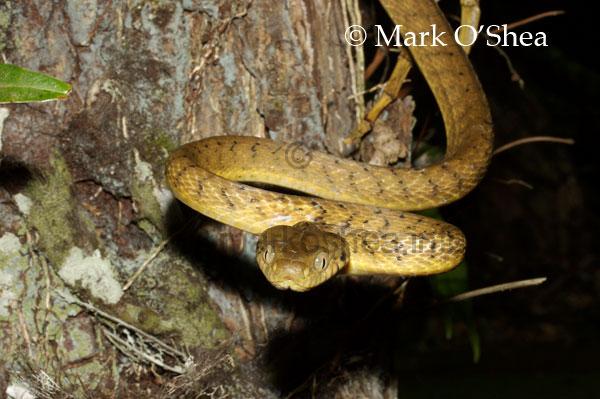
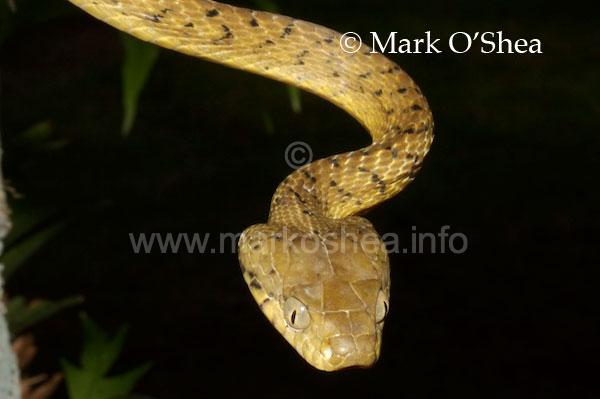
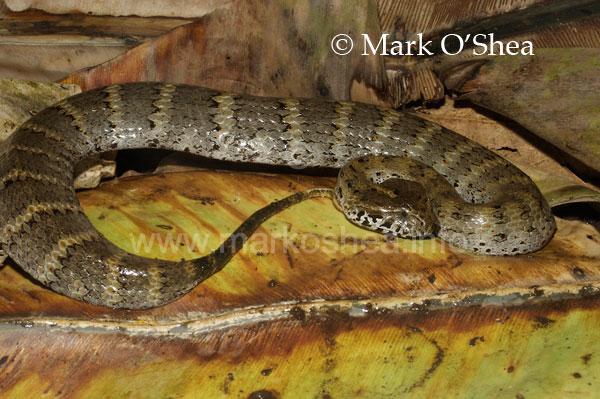
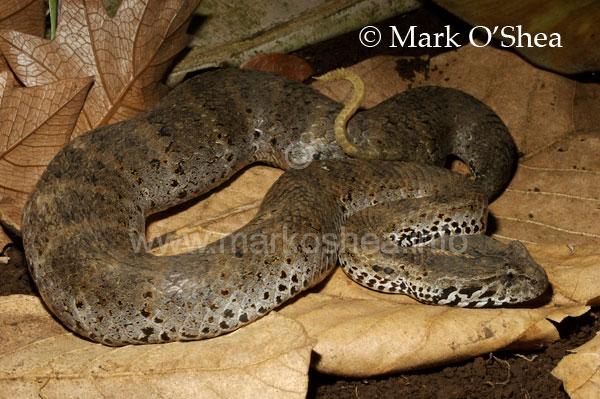
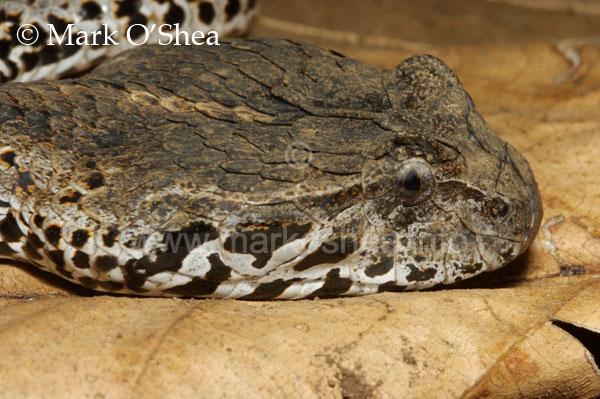
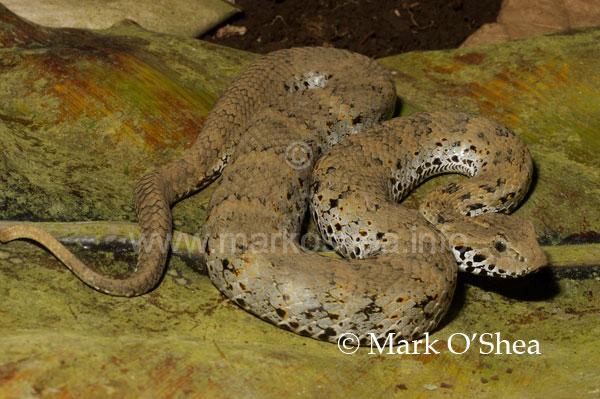
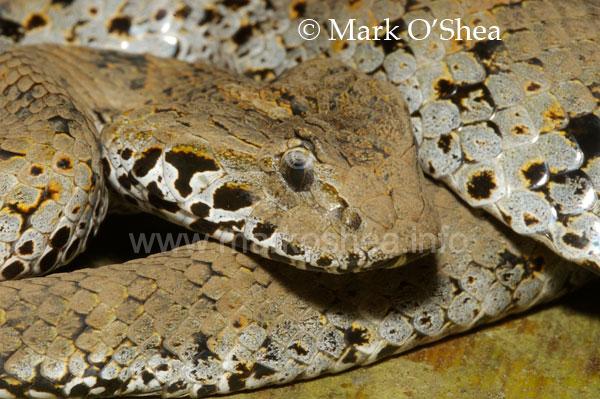
The commonest nocturnal snake encountered is the Brown treesnake (Boiga irregularis) several specimens been taken on night treks up barats or on plantation trails. On Karkar is is sometimes called the "egg python" by expatriots. The diurnally active Coconut treesnake (Dendrelaphis calligastra) is far less frequently encountered. Smooth-scaled death adders (Acanthophis laevis) are found in the village gardens and banana groves. We obtained twelve death adders but several were juveniles which were not suitable for milking and these were not retained.
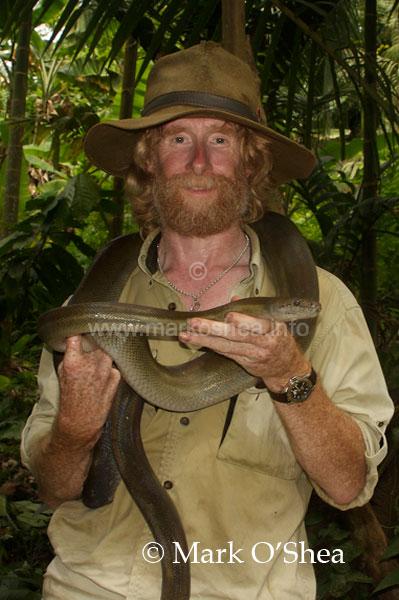
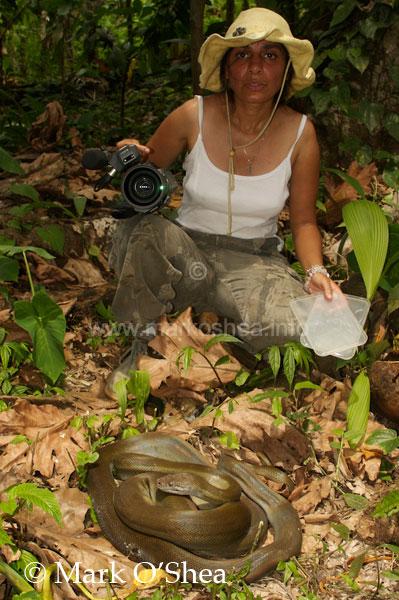
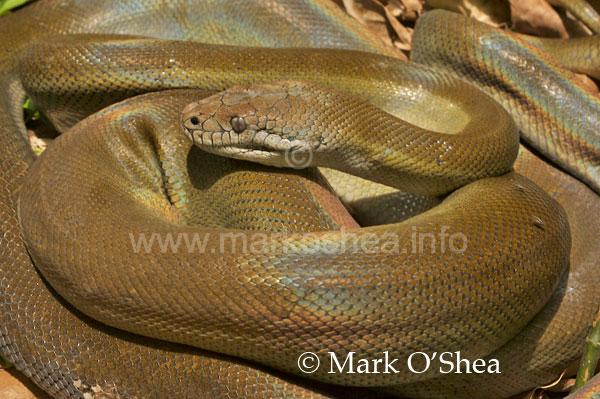
The largest snake so far encountered by myself on Karkar was also my first confirmed python for the island. Called to a large snake in a village garden 3kms up Mt Uluman we captured a large Papuan olive python (Apodora papuana). There followed a lecture on what a valuable rat-catcher this python was and how beneficial it would be to allow it to remain in the gardens unmolested. When the python was released, into a neighbouring rocky barat, everyone promised not to kill it if they met it again, a promise almost certainly broken.
[Page 1 - The Island]
[see also visits to Karkar Island in 1990, 1993, 1994, 2000 & 2008]
| ||||||||||||||||||||||||||||||||||||||||||||